
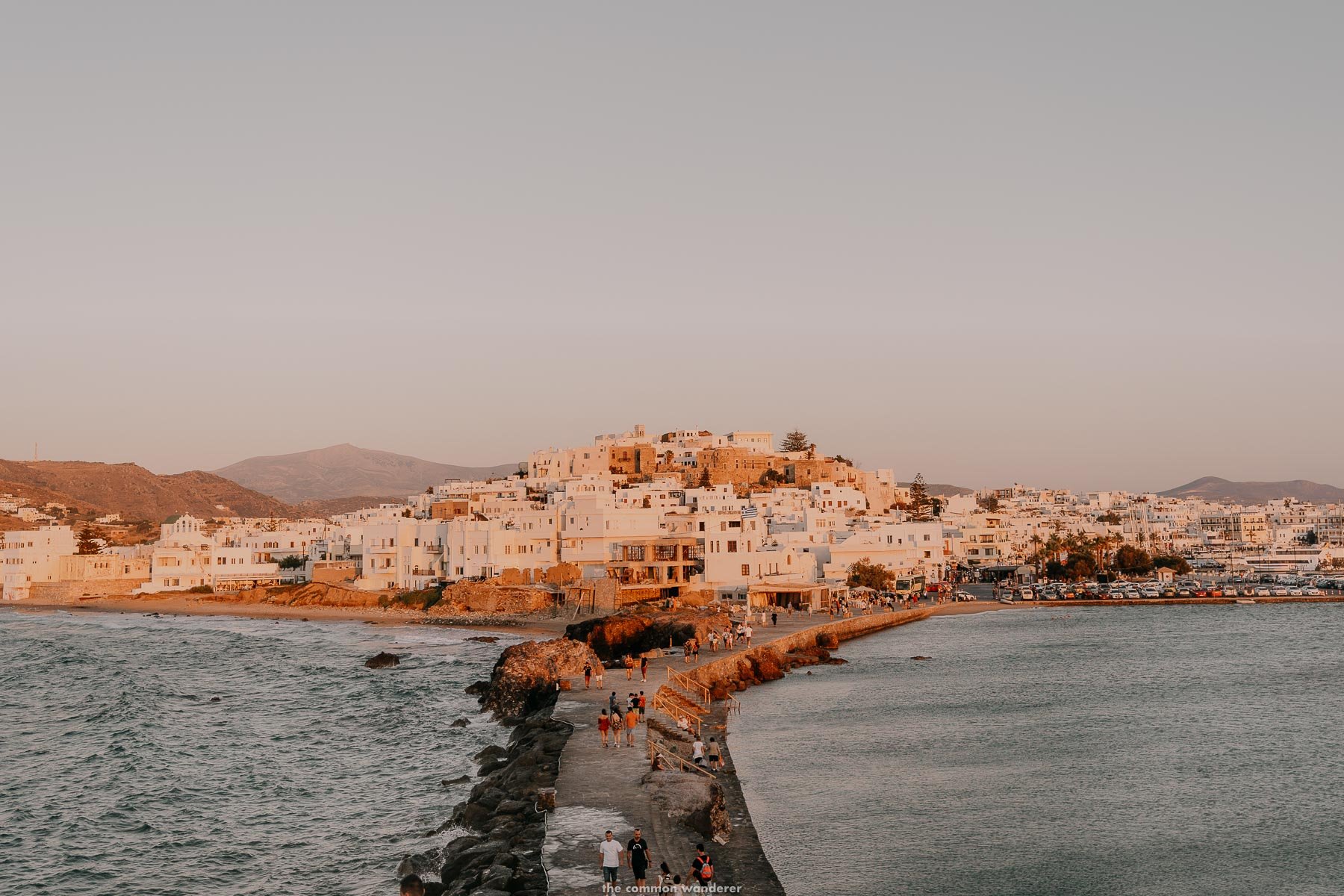
We came for a few days and stayed for a month. In that time, we covered every corner of the island - the mountain villages, the beaches, the hiking trails, the food and the places most visitors never find. This is our complete guide to the best things to do on Naxos.
UPDATED - MAY 2026
The first time we ate at Martina and Stavros' taverna in Koronas, there was no menu.
Martina came out, looked at us, and disappeared back into the kitchen. A jug of red wine appeared without being ordered.
Then, twenty minutes later, a series of plates arrived - we weren't entirely sure what we’d been served, but every single dish was delicious.
After happily spending the next two hours under a grapevine, living in the moment, we finally asked for the bill, and the amount was almost embarrassingly small.
That meal, in a tiny square in a village most Naxos visitors never find, probably told us more about the island than anything else we did in a month.
Naxos is the largest island in the Cyclades and consistently the most underestimated.
The beaches in the southwest are among the best in Greece. The mountain villages, including Apeiranthos, Halki, Filoti, and Koronas, are the kind of places where time slows in a way that feels increasingly rare.
The food and wine, built on incredicly fertile land and a proud local producer culture, are the best we have tried in the Cyclades.
And the hiking, culminating in a sunset from Mt Zas, the highest peak in the archipelago, is something we've thought about many times since.
We came for a few days. We stayed for a month. This guide covers everything worth doing in Naxos.
LOVE OUR PHOTOS? Edit like us with our European Summers Preset Packs, and mobile video filters, inspired by the warm hues and vibes of summers spent in Europe

NAXOS THINGS TO DO OVERVIEW
DON'T MISS | Apeiranthos, and Halki villages, Plaka Beach, Portara Gate at sunset, windsurfing at Agios Georgios, Mt Zas at sunset
BEST BEACHES | Plaka, Agios Prokopios, Hawaii Beach, Mikri Vigla
BEST FOOD EXPERIENCES | Martina and Stavros' Taverna in Koronas, Ambrosia in Filoti, Tortuga at Plaka Beach, cheese tasting at Koufopoulos in Chora
BEST SUNSET SPOTS | Mt Zas summit, Portara Gate, Agios Georgios beach
BEST DAY TRIP | Sailing around Naxos and the Small Cyclades
BEST FOR FIRST-TIMERS | Chora, Agios Prokopios, Halki, Plaka Beach
BOOK YOUR NAXOS TRIP
WHERE TO STAY |Ammothines Cycladic Suites (luxury) · Naxian Utopia (mid-range) · Katerina Roza Apartments (budget)
Full breakdown in our Where to Stay on Naxos guide
TOURS & EXPERIENCES | Download the GetYourGuide app to book sailing trips, cooking classes, and island tours, with 5% off your first app booking
FERRIES | Book your ferry to Naxos from Athens or the surrounding Cyclades through FerryHopper
CAR HIRE |Car Hire is the easiest way to reach Naxos' quieter beaches, mountain villages and interior
GET CONNECTED | Set up an Airalo eSIM before you fly and have data ready to go when you arrive in Greece
TRAVEL INSURANCE | Get a quote from World Nomads, with cover available for 150+ activities
SPEND SMARTER IN GREECE | Get a Wise card to pay in Euros and skip foreign transaction fees
PLAN YOUR TRIP TO NAXOS
HOW TO GET TO NAXOS
Naxos is easy to reach from Athens by ferry or short domestic flight.
We’d take the ferry. Services run daily from Piraeus, and arriving by sea with the Portara coming into view is still the best introduction to the island.
Book summer sailings early via FerryHopper.
For current routes, timings, prices and island connections, see our complete Athens to Naxos guide.
WHEN IS THE BEST TIME TO VISIT?
May and September are the sweet spots - warm sea, manageable crowds and lower prices across the board.
For a full month-by-month breakdown, including the meltemi wind seasons, see our Naxos Island Guide.
WHERE TO STAY ON NAXOS
Naxos has some of the most varied accommodation in the Cyclades, from luxury beach resorts on Plaka to affordable studios a short walk from Chora's old town.
We stayed across the island and have put together a full breakdown to help you find the right fit.
LUXE | Ammothines Cycladic Suites on Plaka Beach is the finest stay on the island, and Naxian Utopia delivers sweeping island views with some of the best pool set-ups in the Cyclades.
MID-RANGE | Naxian on the Beach is our pick for sleek design and direct beach access, while Ampelos Suites in downtown Chora is excellent for those who want to be in the heart of the action.
BUDGET | Hotel Francesca near Agios Prokopios is the best value hotel on the island - the pool alone justifies the price. Hotel Proteas is another solid option for longer self-catering stays.
READ MORE | Our complete guide to where to stay on Naxos - every budget, every corner
HOW TO SPEND 7 DAYS ON NAXOS
Seven days is the sweet spot on Naxos. It's enough time to cover the island properly, get into the mountain villages, spend real time on the beaches and still find a day or two to do absolutely nothing. The doing nothing is, frankly, the point.
Base yourself in Chora for easy access to everything, or along the beach strip at Agios Prokopios or Plaka if the sea is the priority. Either works.
Spend your first afternoon settling in, before getting your bearings with a wander through Chora's old town, the Portara Gate at sunset, and a cold drink at one of the local bars.
From there, a full day on the western beaches, a day driving the mountain villages, an afternoon windsurfing or paddleboarding at Agios Georgios, a day sailing around the Small Cyclades, the Mt Zas hike timed for sunset, a slow village lunch at Martina and Stavros' in Koronas and a final evening in Chora before the ferry.
It's a very good week. One of the best we've had anywhere.
Day 1 | Arrive by ferry, settle into Chora, wander the old town laneways, Portara Gate at sunset, dinner at a Chora taverna
Day 2 | Full beach day on the western coast - Agios Prokopios in the morning, Plaka in the afternoon, Tortuga for sundowners
Day 3 | Mountain villages - Halki, Filoti, Apeiranthos, Koronas. Lunch at Martina and Stavros' if they're open. Drive back via Plaka.
Day 4 | Windsurfing or paddleboarding at Agios Georgios, afternoon swim at Mikri Vigla, slow evening in Chora
Day 5 | Sailing day around the Small Cyclades - Koufonisia, Iraklia, Schinoussa. Book well in advance.
Day 6 | Mt Zas hike timed for sunset. Pack a picnic. Allow 3-4 hours return. Dinner in Filoti or Chora afterwards.
Day 7 | Hawaii Beach in the morning, cheese tasting at Koufopoulos in Chora, slow farewell dinner, evening ferry
HOW TO GET AROUND NAXOS
Naxos is big by Cycladic standards, so having your own wheels makes a real difference.
We’d hire a car for at least a few days if you want to explore the mountain villages, quieter beaches and interior. Compare car rentals via Discover Cars.
Buses are reliable for Chora, the main west-coast beaches and larger villages, while scooters and ATVs work well for shorter coastal trips.
For routes, bus fares and our full transport advice, see our complete Naxos travel guide.

THINGS TO DO ON NAXOS
EXPLORE NAXOS CHORA
Naxos Chora won't hit you over the head with its beauty. It's not Santorini's Oia or Naoussa's picture-perfect harbour. But it's genuine in a way that those places are increasingly not, and that's worth considerably more.
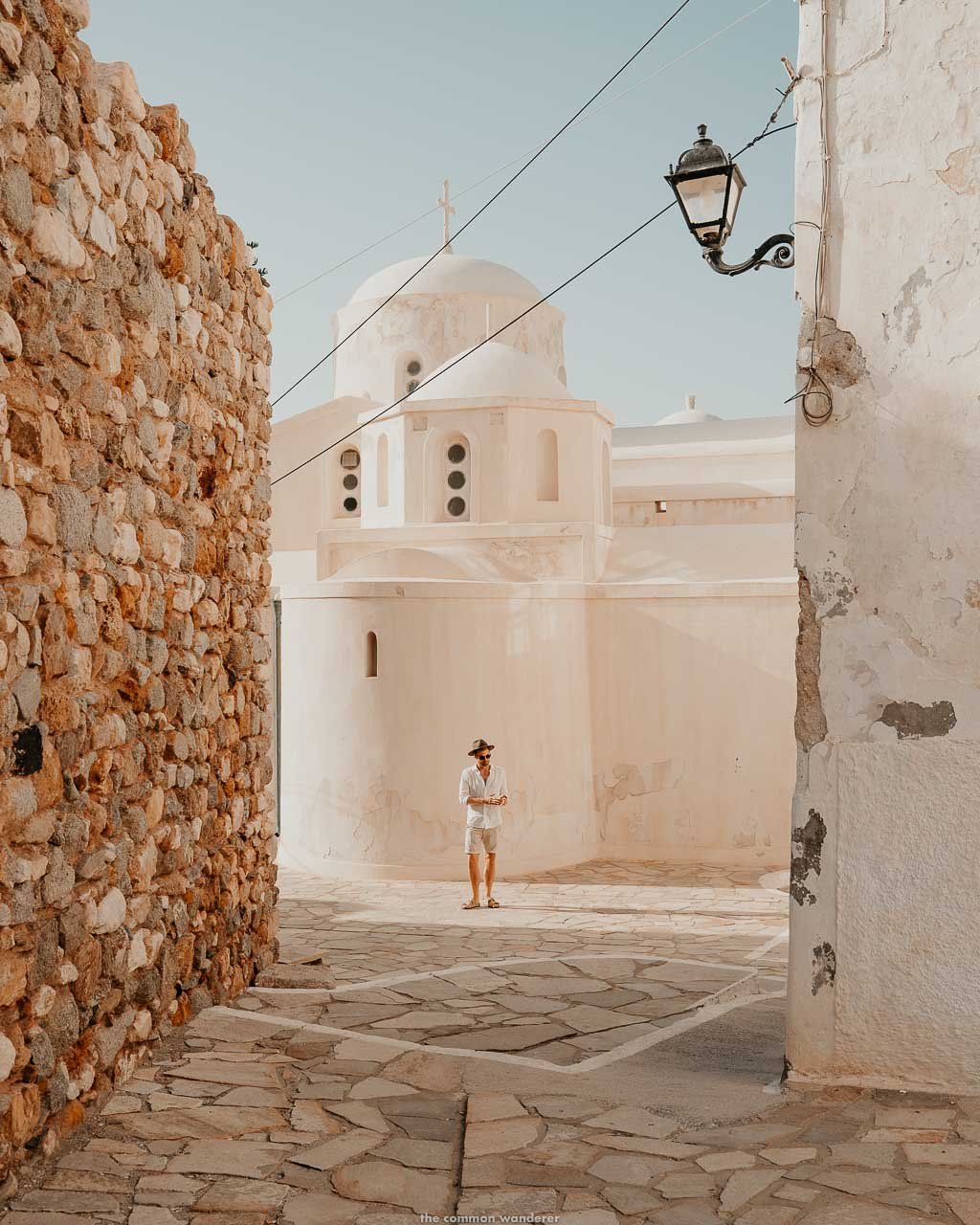
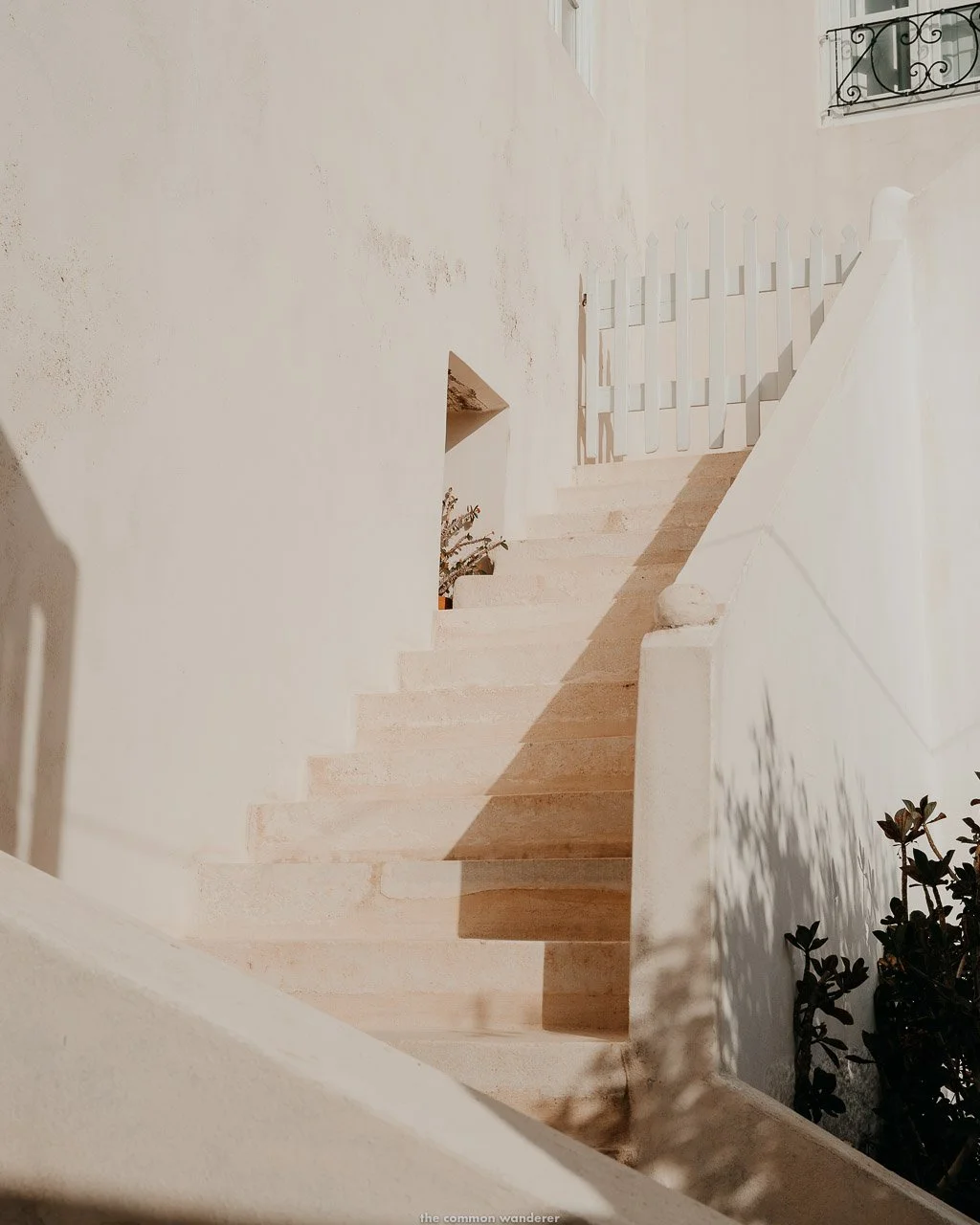
The old town is a labyrinth of narrow laneways and arches built deliberately to confuse pirates, and still perfectly capable of confusing visitors today.
Birds skitter along crumbling stairways. A yiayia watches the world from her window. The smell of something delicious drifts from a kitchen somewhere you can't quite locate. Leave the map at home and wander, and it’ll be one of your favourite memories on the island.
The Venetian Castle sits above it all, built in 1207 and inhabited ever since, with covered laneways, historic churches, museums and harbour views that reward anyone willing to climb up.
The harbour itself, unusually for a Greek island port, is genuinely worth spending time at. Small and picturesque against the backdrop of the castle, it comes alive as the sun starts its slow descent into the Aegean.
The old market running through the town is the best we found in the Cyclades - reasonable prices, original pieces and a shopping experience considerably more relaxed than anything on Santorini, Mykonos or Paros.
Stop by Pocket Gallery for contemporary ceramics and art. Don't miss Kiriakos Tziblakis Local Products, the oldest market store on the island - nuts, dried fruits, local honey, olive oil, homemade marmalades and a full range of Naxian cheeses covering everything from graviera to xinomizithra.
And before you leave, find Padelis Coffee Shop and order the loukoumades. Crisp outside, soft inside, local honey on top. The best we tried in the Cyclades.
For everything worth seeing, eating and doing in Chora, our Naxos Chora guide covers it all.
Tip | Much of the old town closes for siesta in the mid-summer heat. Come early or after 5 pm to appreciate it properly.
SUNSET OR SUNRISE AT PORTARA GATE
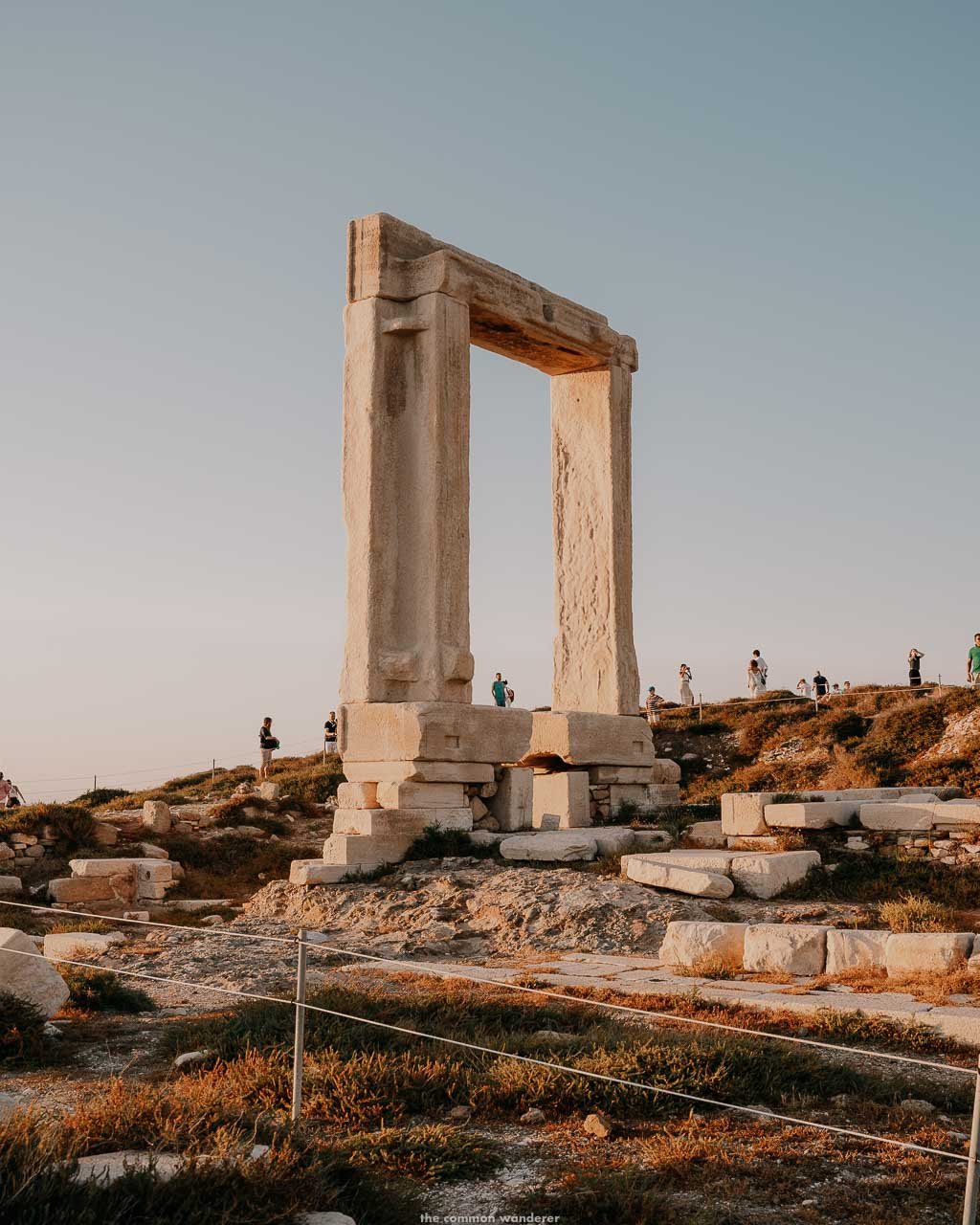
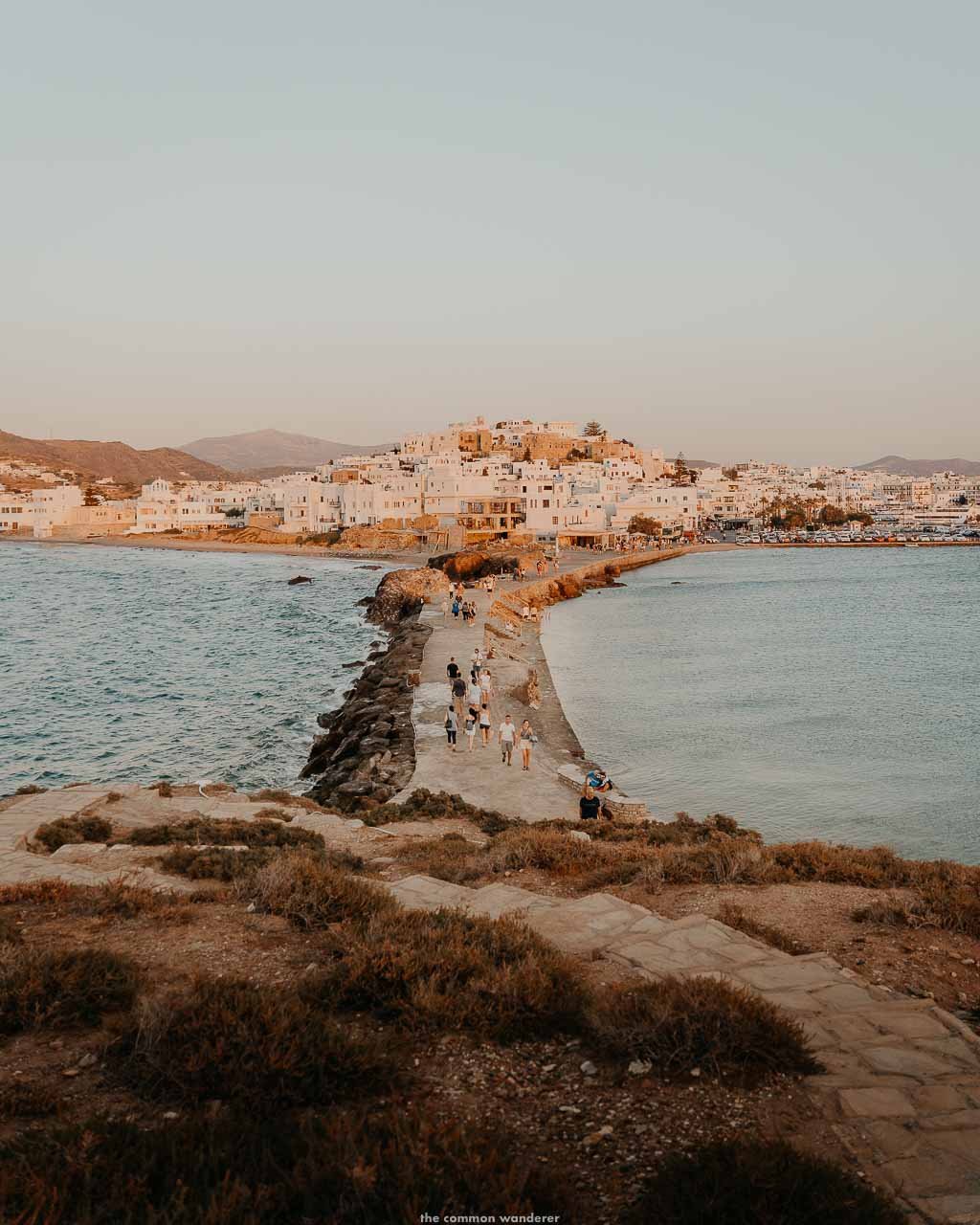
Just offshore from Chora, on the tiny islet of Palatia, the iconic marble Portara gate is all that remains of an unfinished temple to Apollo.
Commissioned by the island's 6th-century BC ruler Lygdamis and abandoned mid-build due to war, only the grand lintel remains today, standing proudly, like a portal, over the harbour.
Every evening in peak season, the crowds make their way across the narrow causeway to watch the sun dip behind the gate into the Aegean. It's insanely beautiful to watch.
It's also chaotic - drones, photoshoots, hundreds of people jostling for position. Any sense of calm is long gone by the time the light actually turns.
Which is exactly why we recommend going at sunrise instead.
You'll miss the Instagram shot of the sun setting through the ancient frame. In return, you'll have the site almost entirely to yourself, in light that's arguably more beautiful and with a silence that makes the whole thing feel like it was built for exactly this moment.
For us, it’s a more honest way to experience one of the most significant ancient sites in the Cyclades.
THE DETAILS
Where |Portara Gate, Naxos
Tip | Go at sunrise - you'll have it almost entirely to yourself. The walk across the causeway takes five minutes from the harbour

SPEND TIME AT THE BEST BEACHES ON NAXOS
If there's one thing Naxos does exceptionally well, it's its beaches.
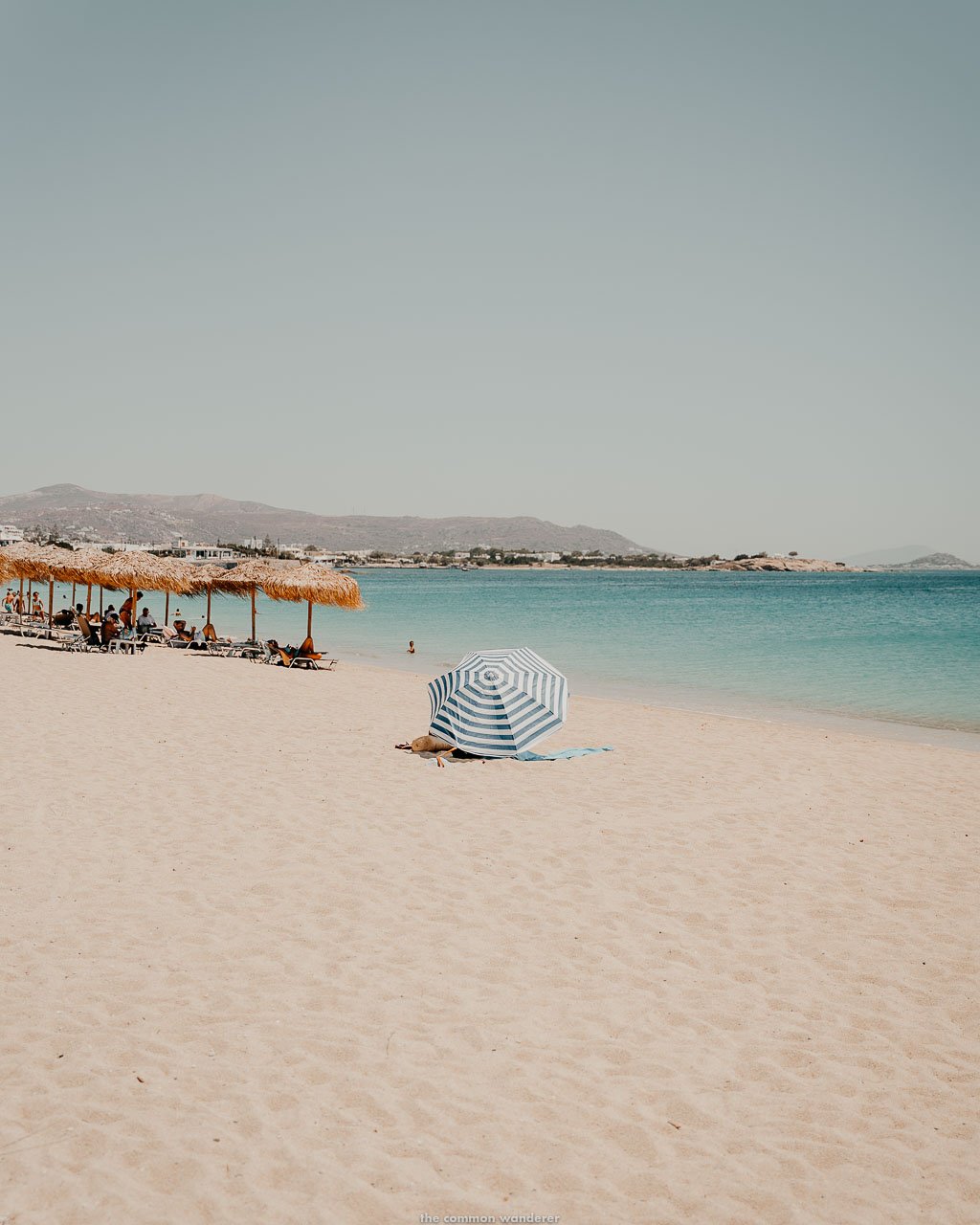
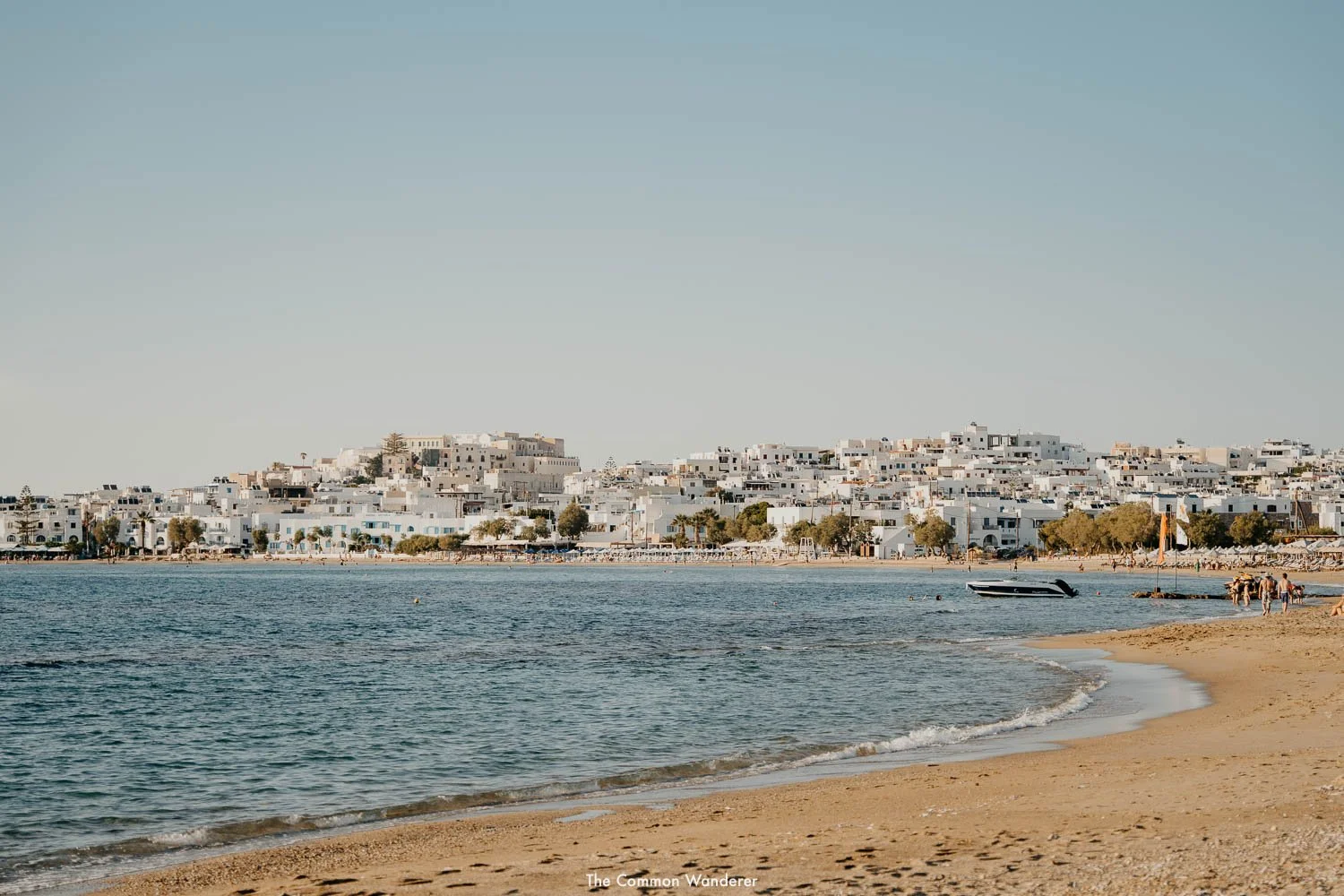
Take Plaka as the starting point. A long, soft stretch of white sand backed by dunes and dotted with relaxed beach bars. The water is crystal clear, the atmosphere genuinely easygoing.
At times, it felt more like Southeast Asia than the Cyclades, and we'd often pause to remind ourselves we were still in Europe. But Plaka is only the start. The real beauty of Naxos' coastline is its variety.
Plaka's endless sands contrast sharply with Hawaii Beach, a rugged shoreline backed by striking red cliffs in a cedar forest. Agios Prokopios buzzes with sunbeds and watersports. Agios Georgios, near Chora, is a magnet for windsurfers and paddleboarders. Agia Anna is perfect for families. And the untouched beaches to the southeast feel genuinely timeless.
A few of our personal highlights:
PLAKA | endless white sand, swimming with turtles on the southern stretch in the morning, Tortuga beach club in the afternoon - our favourite on the island. Read our full Plaka guide.
AGIOS PROKOPIOS | the most popular beach on the island, and deservedly so. Gorgeous turquoise water, great beach clubs and watersports. Kahlua is our pick for sunbeds and service. Read our full Agios Prokopios guide.
HAWAII BEACH | remote, dramatic and completely undeveloped. Burnt orange cliffs, cedar forest, no facilities. Bring everything you need and allow 30 minutes from Chora. Worth every bit of effort.
MIKRI VIGLA AND AGIOS GEORGIOS | world-class windsurfing conditions thanks to the meltemi. Flisvos Sports Club at Agios Georgios is the place to learn if you're a beginner.
For the full breakdown of every beach worth visiting, our Naxos beaches guide has everything covered.
Note | Naxos beaches are prone to the meltemi, strong northern winds that peak in July and August. Perfect for windsurfers, less ideal for those wanting calm water. The beach guide covers which spots are best on windy days.
EXPLORE THE MOUNTAIN VILLAGES OF NAXOS
The beaches on Naxos are gorgeous. But the mountain villages are what we think about most.
We visited every major village on the island during our month here, and each one offered something the coastal towns simply can't: genuine local life, unhurried taverna lunches, marble streets that have barely changed in centuries and a feeling of being somewhere that hasn't been reshaped around tourism.
The real Greece, as the cliché goes, except on Naxos, actually holds up.
Don't skip them. Hire a car for the day and do them all.
HALKI
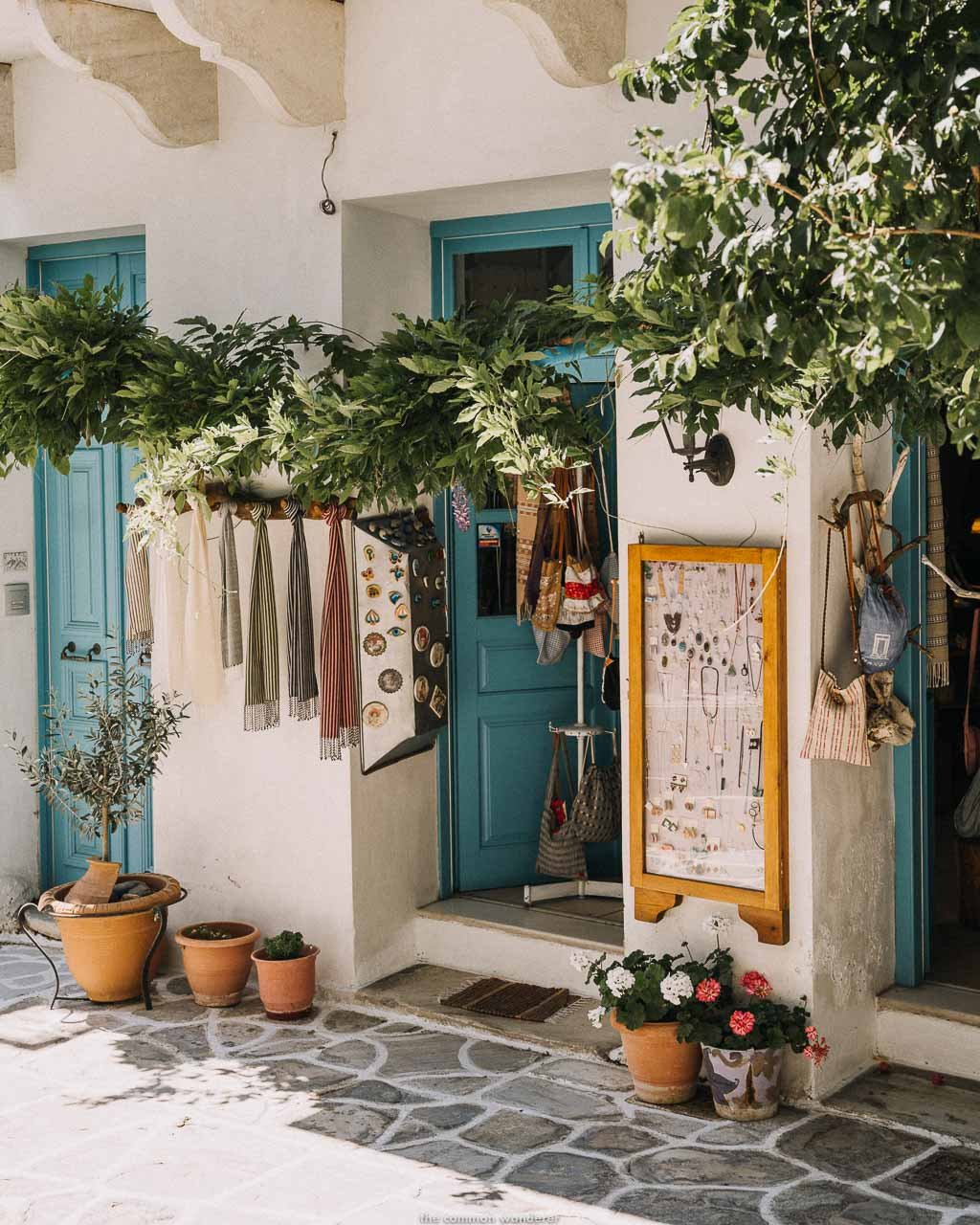
Set amongst the citrus orchards and ancient olive groves, Halki is our personal favourite.
Once the island's bustling capital, its neo-classical buildings and marble laneways now lead to a shaded main square where we suggest setting up for a long lunch.
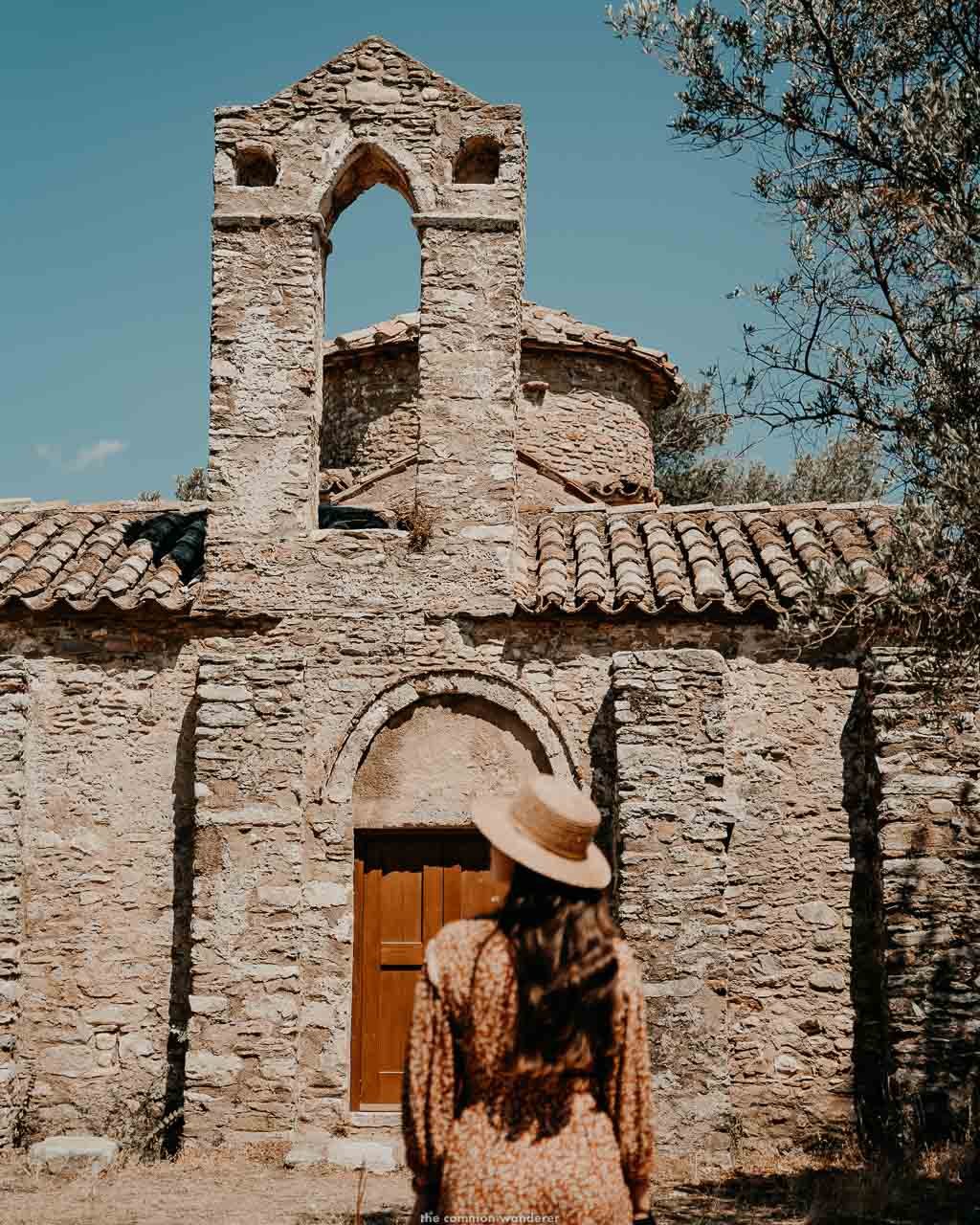
The Vallindras Kitron Distillery is a must, as is the Fish & Olive Gallery, and the 11th-century Byzantine Church of Saint George Diasoritis is just a short walk out of town among the olive groves.
Visit early morning or after 5 pm - the midday heat is relentless, and the restaurants close in the afternoon.
READ MORE | Our complete guide to Halki, Naxos
FILOTI
A short drive up the road from Halki, Filoti was the first village we passed through on Naxos that felt entirely unperformed for visitors.
Salt of the earth locals mill about at bar tables lining the leafy main street, catching up on the week's news while fully laden farm trucks roll past, stacked with Naxian potatoes destined for Chora. The weekend procession to the town cathedral. The faint crackle of a radio from somewhere uphill.
There's a Tower of Barozzi worth finding in the laneways, an imposing structure from the mid-1600s, and the atmospheric Church of Panagia Filotitissa.
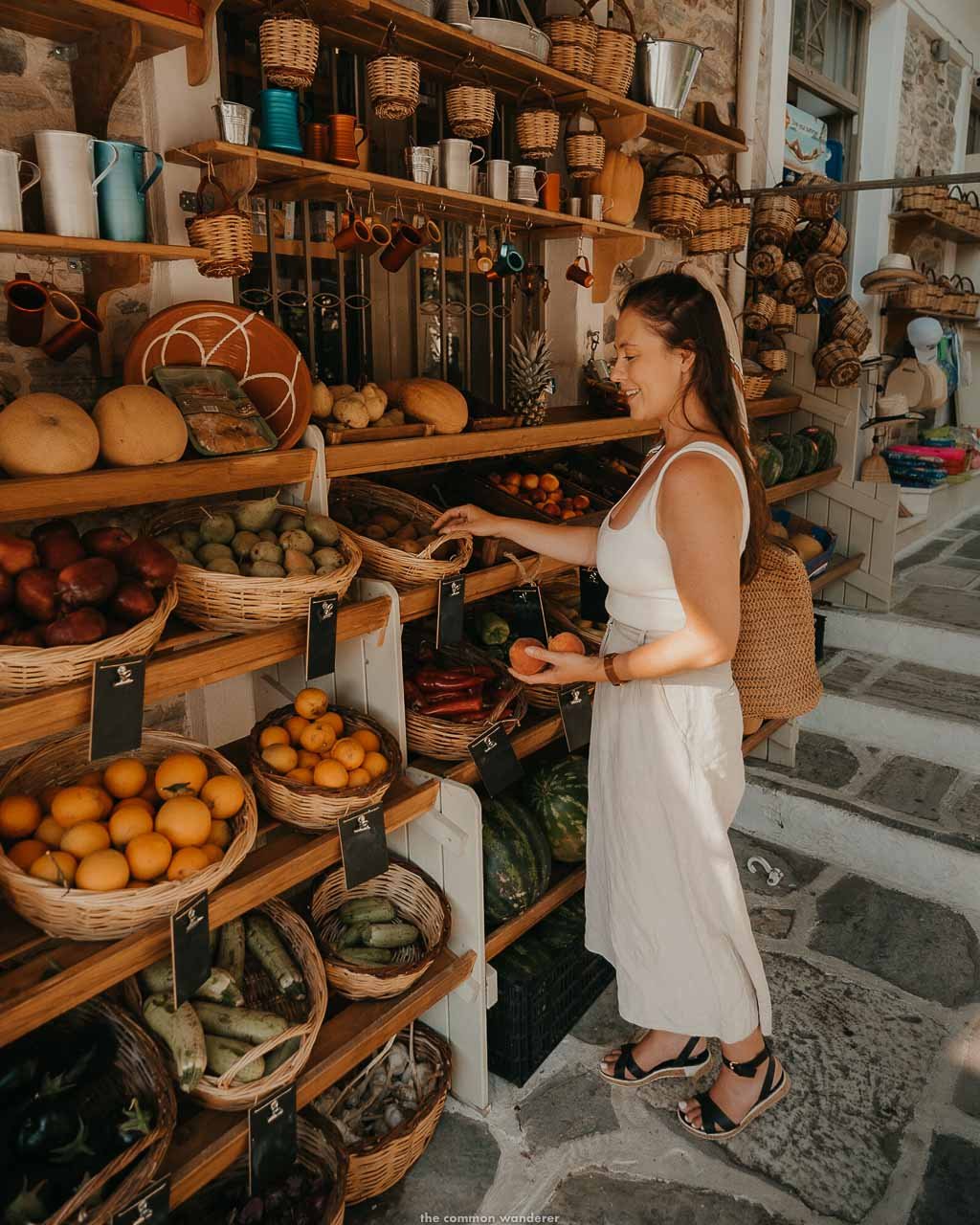
Ambrosia on the main square is one of the better restaurants on the island. Don't miss the produce stall right on the square either - fresh fruit and vegetables piled high, and worth stopping at even if you're not buying.
Just outside the village, the trailhead for Zas Cave and the Mt Zas hike begins, the highest peak in the Cyclades and one of the best sunset experiences on the island.
APEIRANTHOS
Our first mistake in visiting Apeiranthos was timing our trip for midday, when the town was scorched with white heat. Our second was not spending longer.
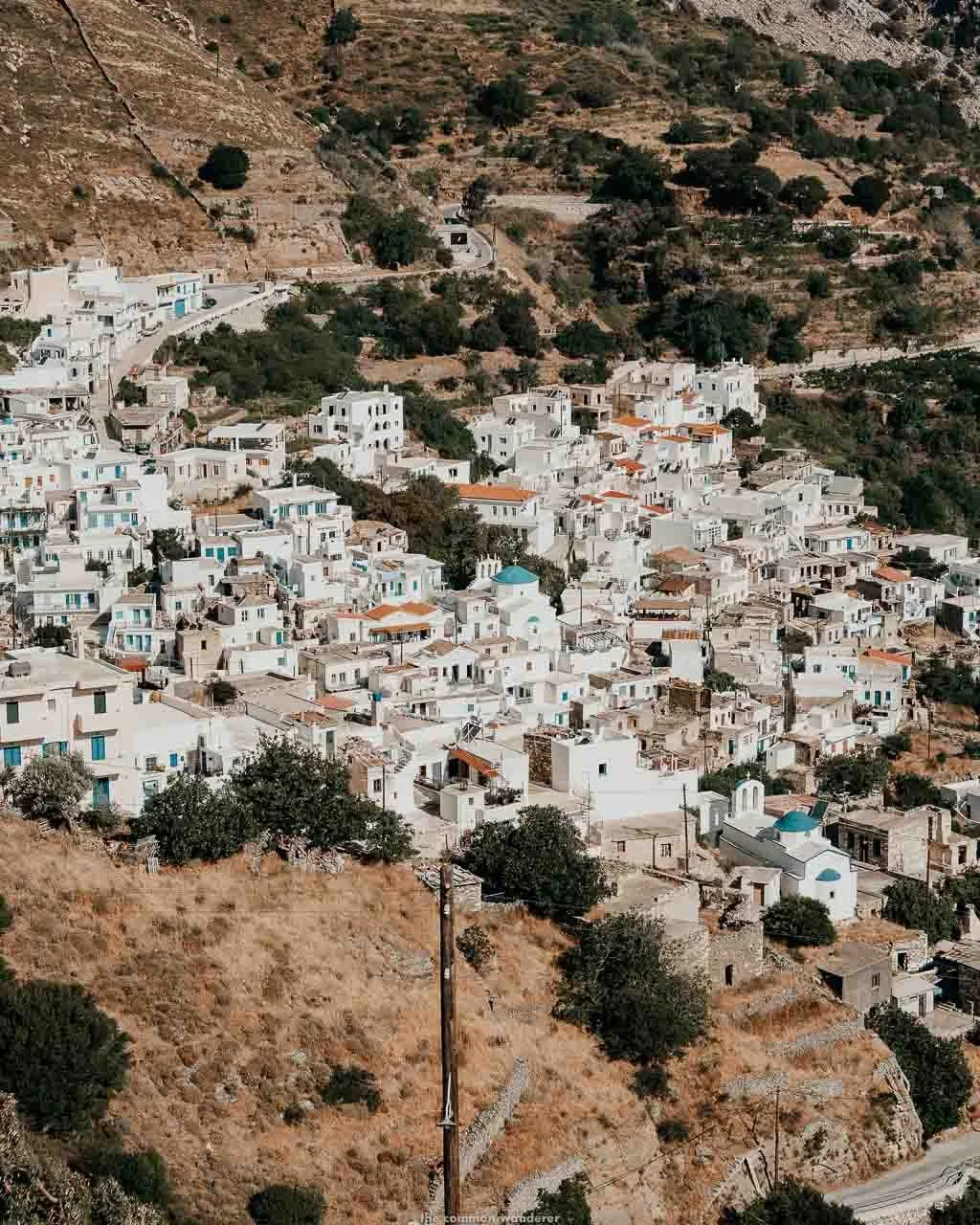
This gorgeous town, made mostly from marble and still bearing the hallmarks of the Venetian era, is a must-visit on Naxos.
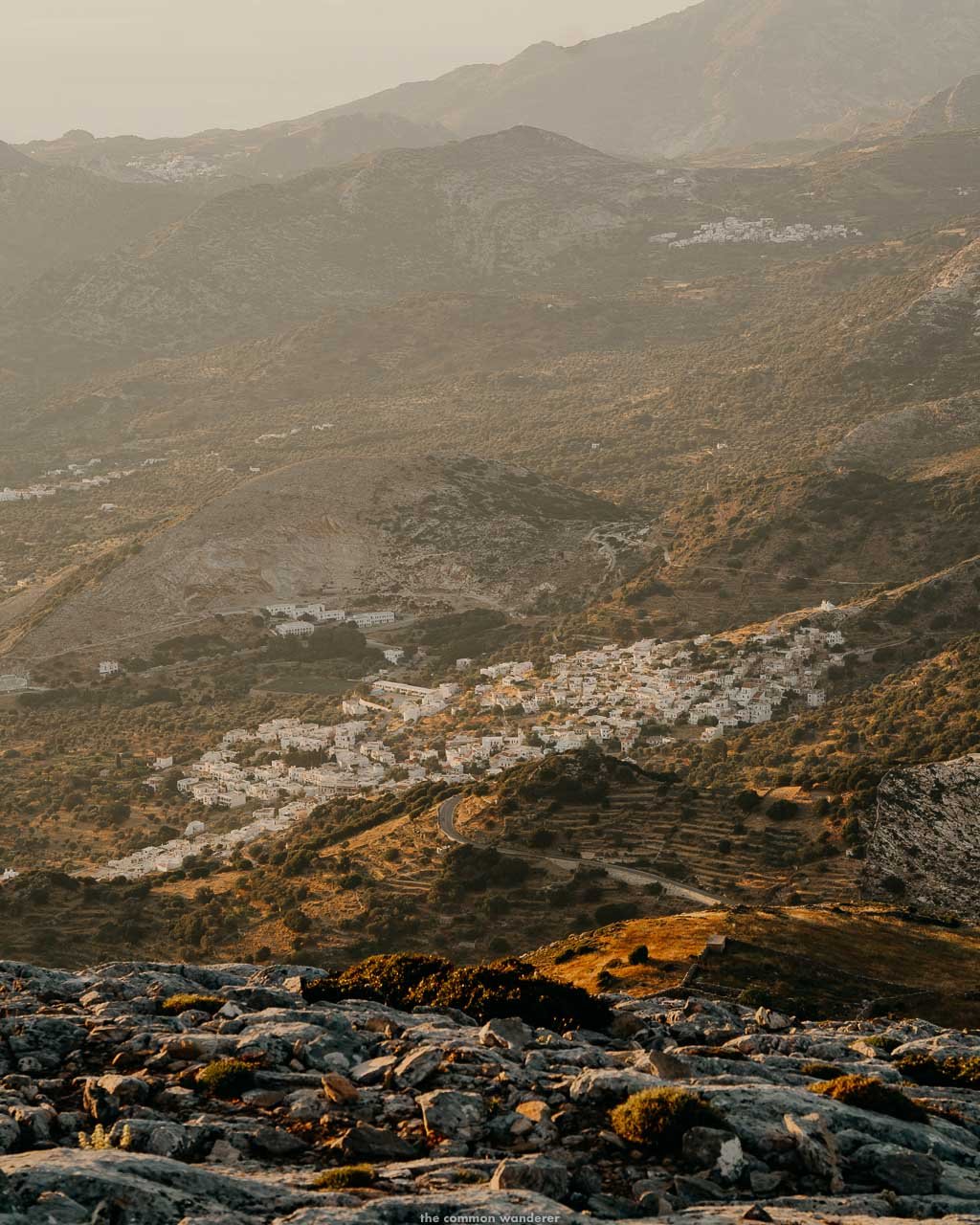
Like all the mountain villages here, a walk through is like walking through a time warp - marble-paved laneways covered by archways, defence towers and walls. Fig trees grow from every available crack in the stone. Mules slowly ascend the mountain, delivering goods to elderly residents living up high.
To get a sense of the village, just get lost among the alleyways and follow your nose. You'll eventually end up back where you came from.
In town, there are a few things worth seeking out, including the archaeological museum with over 2,000 exhibits, the Museum of Natural History and the folklore museum.
And there are some very good restaurants serving traditional food at reasonable prices overlooking the hills toward Mt Zas. We recommend Taverna Platanos, which has the best moussaka we tried in Greece, washed down with a jug of local red wine. We spent hours here.
READ MORE | Our Apeiranthos guide
KORONAS
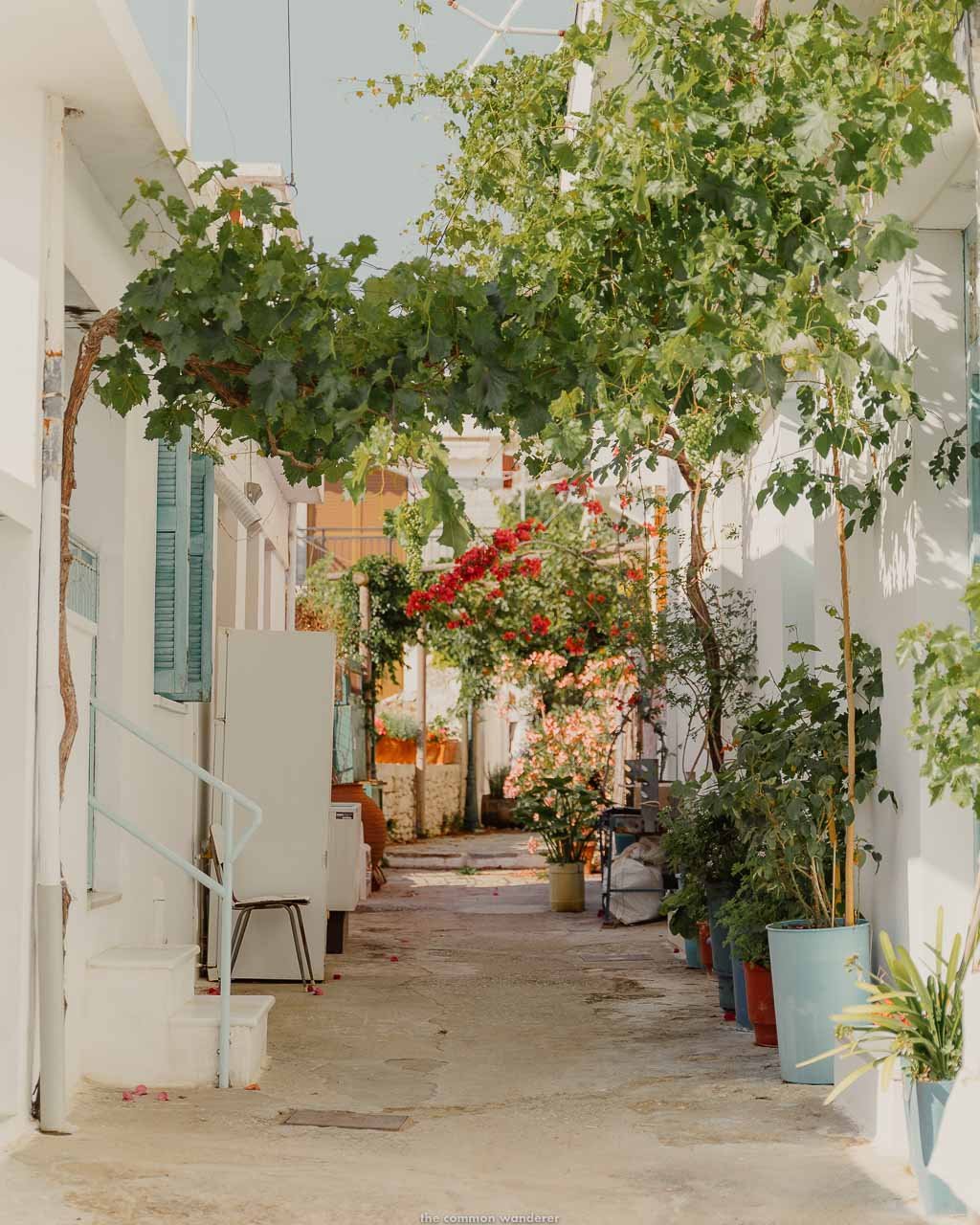
While Apeiranthos, Filoti and Halki get all the attention, Koronas feels like another world.
It's the sleepiest town on the island, and almost entirely unaccustomed to visitors. There's not a lot to do here in any conventional sense - it's really just a place to wander the narrow laneways, sit in the gorgeous leafy town square and watch very little happen at a very slow pace.
The level of English drops off, the tourists disappear entirely, and the views north over the Aegean from up here are some of the most dramatic on Naxos.
Martina and Stavros' Taverna on the square is the single best meal we ate on the island. There's no menu, just whatever Martina is cooking that day. Think classic, home-cooked Greek food in a lovely green square at prices that feel almost impossible.
We suggest visiting hungry and staying as long as they'll have you.
TAKE A ROAD TRIP THROUGHOUT THE ISLAND
One of our favourite days on Naxos was spent tracing the island's outer edge by car, and it's the day we'd recommend to anyone who wants to understand what Naxos actually is.
Stick to the southwest, and you'll see the beaches and Chora. Get in a car and head north, and the island changes completely.
Towering peaks, sprawling olive groves, remote villages where farm life continues as it always has. It feels enormous up there, in the best possible way.
Our suggested route: head north of Chora toward Melanes first, where the ancient Kouros statues lie unfinished in the olive groves, abandoned mid-production thousands of years ago.
From there, follow the winding road toward Kinidaros and Koronas, the mountain views opening up as you climb.
Stop in Koronas for lunch at Martina and Stavros' Taverna. Once the belly is suitably full, drive the scenic road toward Apeiranthos - this stretch, with Mt Zas in the distance, olive trees as far as you can see and the deep blue Aegean beyond, might be the most beautiful part of the island.
Stop in Apeiranthos for a wander, then continue through Filoti and Halki on the way back toward Chora.
End the day at Plaka Beach. You've earned it.

MT ZAS SUMMIT HIKE
We asked Meike and Jan at Flisvos Sports Club for their top recommendation on Naxos. Without hesitation: "Hike Mt Zas for sunset."
Hiking on a Greek island seemed like a strange idea when we'd come for the sea. We did it anyway, and they were completely right.
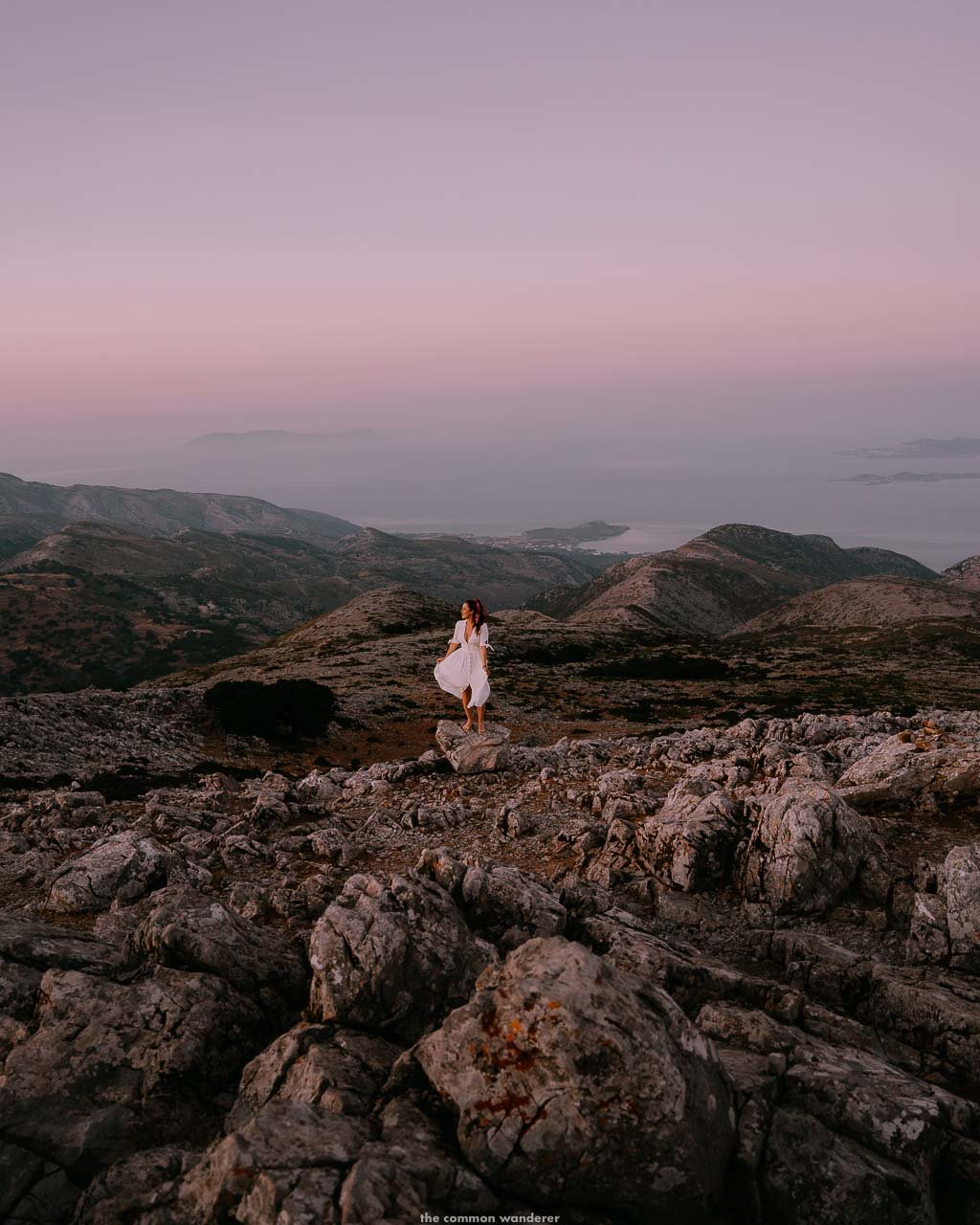
At 1,003 metres, Mt Zas is the highest peak in the Cyclades, its silhouette dominating the island's skyline. According to mythology, this is where Zeus was raised, and the summit does feel suitably epic, with sweeping 360-degree views across the Aegean, the whole of the Cyclades and, on a clear day, Asia Minor in the distance.
We took the route from Agia Marina Chapel, the easiest and most direct ascent.
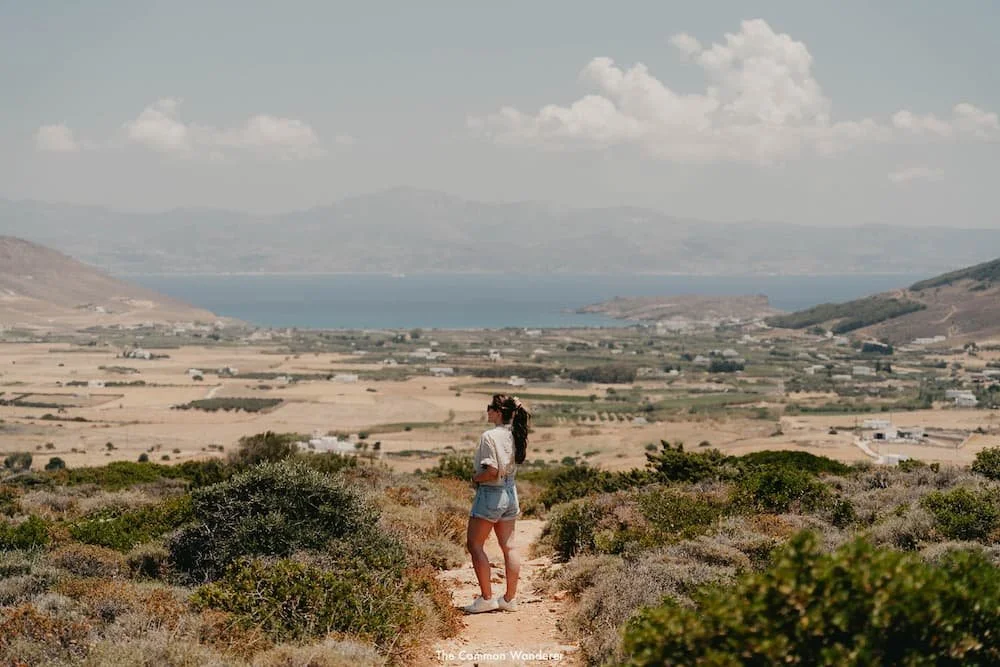
The trail begins along a forested hillside path - rustic farmhouses, the smell of animals, the sound of bells. Before long, it rises steeply through a craggy valley and then through scrubby Mediterranean growth, a narrow, dusty trail with Naxos' fertile interior to the left and glimpses of deep blue sea to the right.
Once you summit via the wide plateau, the view stops you completely. You're standing on the edge of a sheer ridge overlooking the whole of the Cyclades, watching the islands turn golden as the sun drops. We stayed until it was nearly dark and had to navigate the last section by phone torch.
Allow 4 hours return. It's manageable, but the summit section is loose rock - wear proper shoes. Bring at least 2 litres of water, sun protection and a torch for the descent. Non-negotiable on all three.
THE DETAILS
Where | Mt Zas, Agia Marina Chapel trailhead
Time | Allow 4 hours return
Pack | 2L water minimum, walking shoes, sun protection, torch for the descent
Read more | Our complete Mt Zas hiking guide
VISIT ZAS CAVE AND ARIA SPRING
We set off early, and it was already hot.
The trail from Filoti winds up through a dry rocky valley, scraggly vegetation, loose stones underfoot, and goats picking their way across the hillsides above. And no shade to speak of.
The path rises steeply, and the Aegean opens up behind you as you climb, the southwestern beaches spread out below in that particular shade of blue that makes you briefly question why you're hiking instead of swimming.
The cave appears on the left about halfway up, larger than expected and noticeably cooler inside. Standing in it, you can understand why ancient groups sheltered and lived here - there's space, there's protection from the elements, and there's a quality of silence that feels different from anywhere outside.
Whether or not Zeus was actually raised here is beside the point.
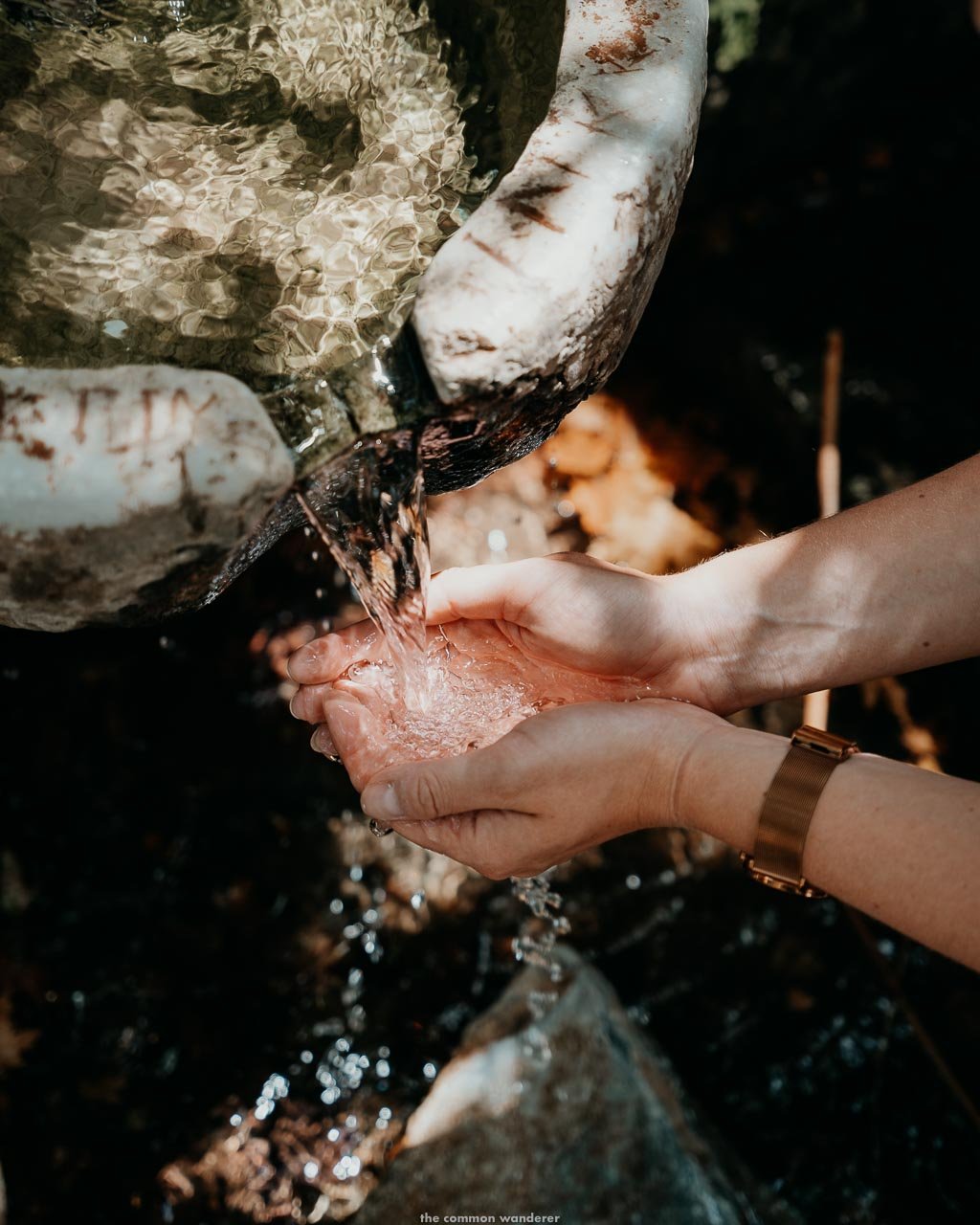
From the cave, you can push on to the Mt Zas summit (see above) or head back down toward Aria Spring - a natural well set under a large plane tree at the base of the trail. Cold, fresh water straight from the ground. After two hours in the heat, it's exactly what you need.
THE DETAILS
Where | Zas Cave, Naxos
Time | Around 2 hours return to the cave and back via Aria Spring
Tip | Start as early as possible - there is no shade on this trail, and the sun is serious by mid-morning. Bring at least 1 litre of water and wear proper shoes. The path is rocky throughout.
Read more | Our complete Mt Zas and Zas Cave hiking guide

SPEND THE DAY AT TORTUGA BEACH CLUB
As Australians, the concept of paying for a beach still feels slightly absurd. Our beaches are free, and the closest thing to a beach club back home is the surf lifesaving club, which exists to rescue people rather than charge them for a sun lounger.
But Naxos does beach clubs well — and Tortuga, right in the middle of Plaka Beach, is the best we found in the Cyclades.
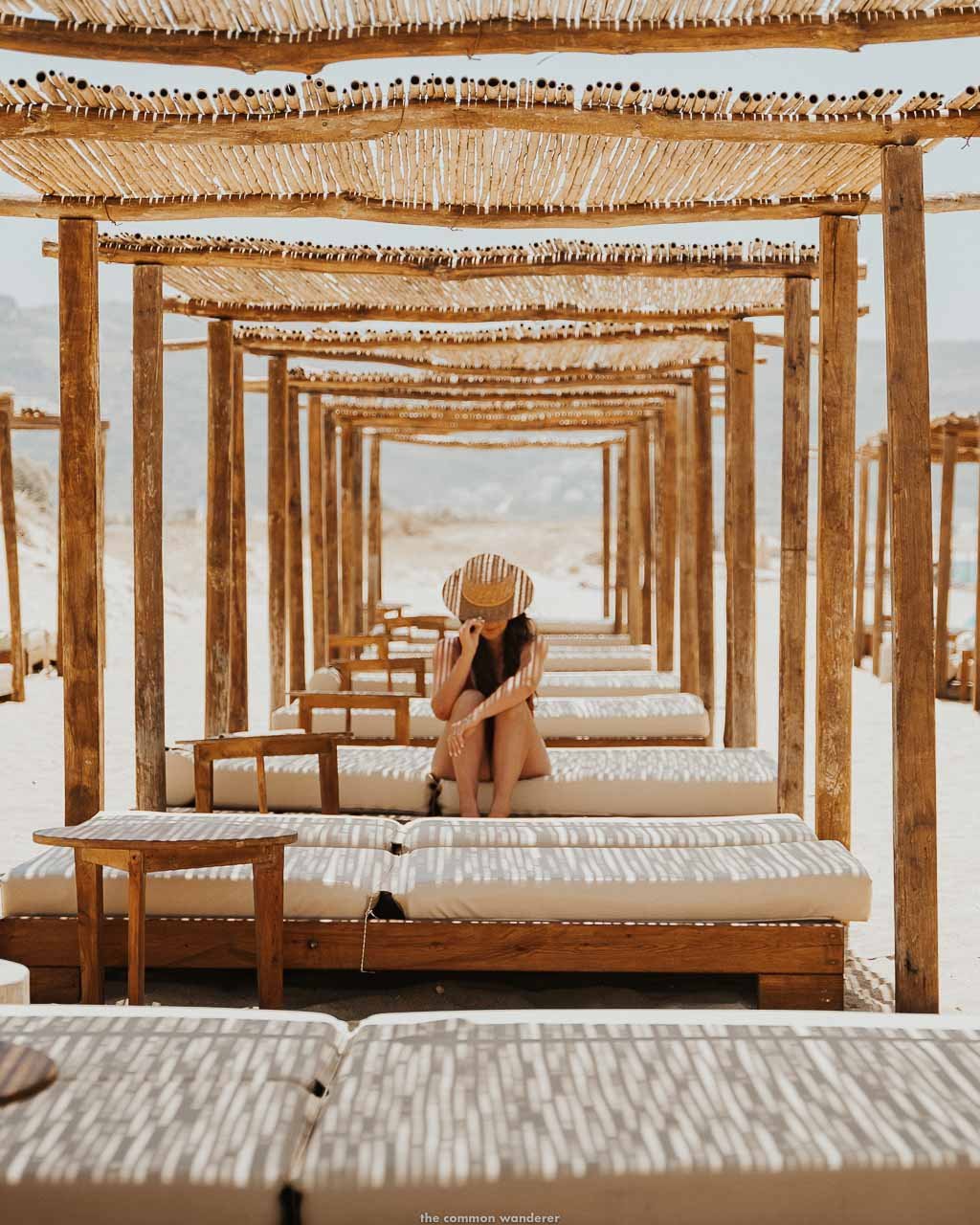
The design sits somewhere between Bali and the Aegean: tribal-chic, minimal, genuinely relaxed. Sun beds at the water's edge run €30 for a set including towels and water.
The canopy keeps the worst of the midday sun off, and the view across Plaka is as good as it gets.
The food is the real standout. Fresh, modern Mediterranean cooking built around Naxian produce, with a menu we worked through fairly thoroughly. The seabass ceviche with citrus (€15) was exceptional. The sautéed scallops with kakavia sauce (€20) are equally so.
The grouper spaghetti cooked in fish broth, garlic, ginger and chives (€29) is the kind of dish you think about for weeks afterwards. The beach snack menu starts from €10 - the club sandwich and the guacamole with watermelon are both worth ordering.
The cocktail menu was developed with one of Athens' better bars, and it shows.
It’s not cheap, but for a beach day, we think it’s worth it.
Other beach bars on Plaka worth knowing about: Nomad Naxos, the adjoining Tohu Beach Bar and the more laid-back Cedar Cafe.
THE DETAILS
Where | Tortuga, Plaka Beach
Hours | Daily 11am to 11pm
Sunbeds | €30 per set including towels and water
Read more | Our complete Plaka Beach guide

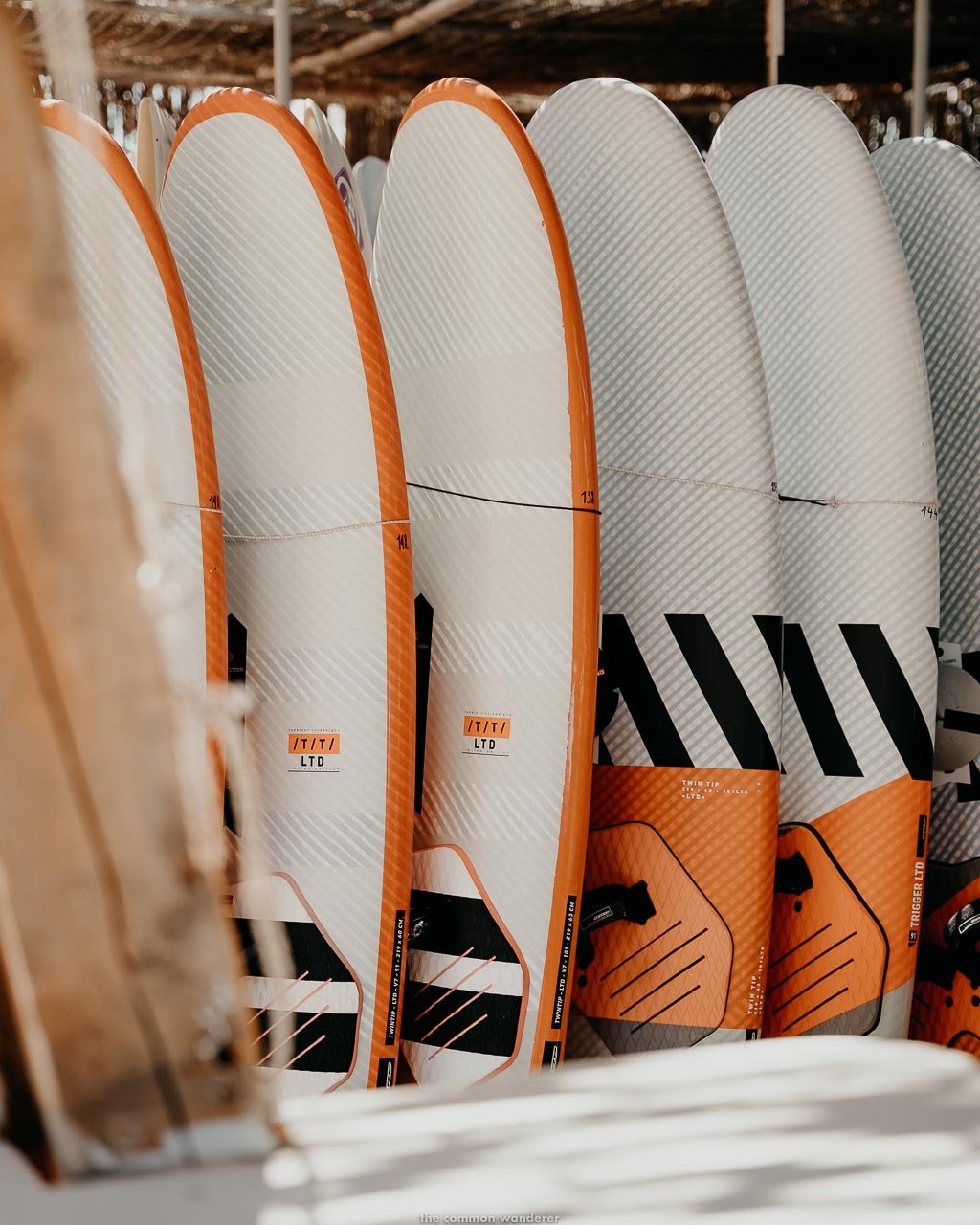
LEARN TO WINDSURF OR PADDLEBOARD
Naxos is one of the best windsurfing destinations in the world.
The summer meltemi winds create conditions that attract serious windsurfers from across Europe, and the shallow lagoon at Agios Georgios is ideal for beginners to learn without getting into trouble.
We'd never windsurfed before arriving on Naxos. We stayed at Flisvos Sports Club for part of our time on the island, and watching the instructors work with complete beginners, patient, encouraging, and genuinely good at teaching, made us want to try it ourselves.
The combination of flat, shallow water and consistent wind makes the learning curve considerably less steep than you'd expect.
For experienced windsurfers, Mikri Vigla further down the coast offers the more challenging conditions - waves up to two metres, side-onshore wind and space to really push it.
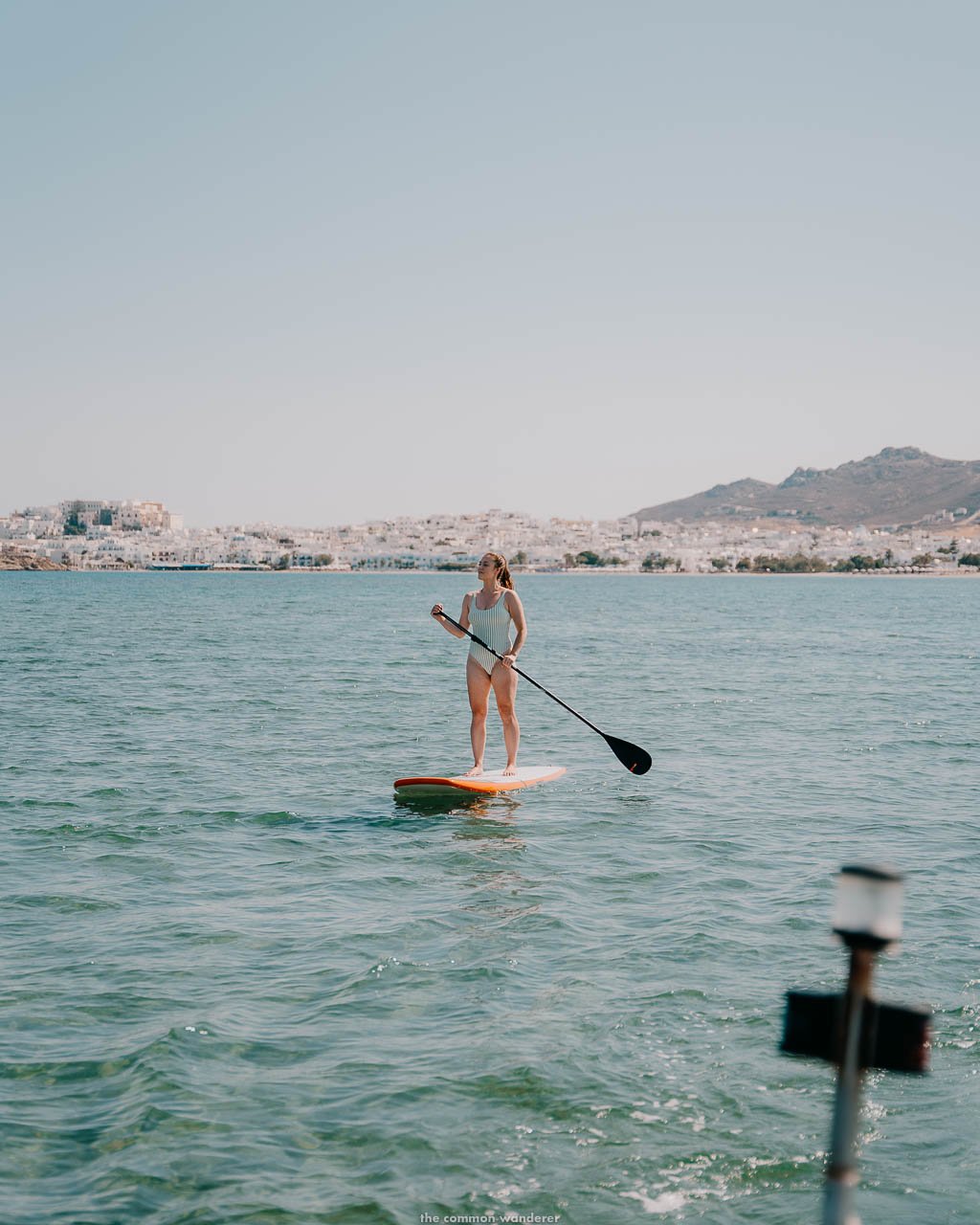
If windsurfing isn't your thing, paddleboarding on the lagoon is a lovely way to spend a morning - exploring the coastline toward Chora at your own pace, with the whole of the Aegean to yourself.
THE DETAILS
Where | Flisvos Sports Club, Agios Georgios Beach
Lessons | Beginner courses start from around €190 for 3 days — check current prices and availability directly with Flisvos
Season | Late May through late October
TEMPLE OF DEMETER
We visited the Temple of Demeter at midday - a running theme in our Naxos adventures, and one we'd strongly advise against repeating. There was no shade, yet serious heat, and also nobody else around, which made the whole complex feel unexpectedly private.
Built around 530 BC from Naxian marble in the hills near Sangri, the Temple of Demeter is one of the most significant ancient sites in the Cyclades.
It was constructed for religious worship, fell into decline after the 3rd century BC and was eventually converted into a Christian church, and you can see the layers of history in the structure itself.
The site was rediscovered in the late 1940s and partially restored. It's more spread out than you'd expect for something this size, with a number of distinct ruins across the grounds - the temple foundations, the pronaos, sections of the original marble walls, the remains of the altar and several architectural fragments that survived the conversion to the church.
The small on-site museum gives a solid overview of the temple's history and significance without overstaying its welcome.
The setting is what makes it. Standing in an open field in the Naxian hills, surrounded by olive trees with mountains beyond, with 2,500 years of history underfoot and nobody else around — that's the experience.
THE DETAILS
Where | Temple of Demeter, Sangri, Naxos
Hours | Wednesday to Monday, 8:30am to 3pm. Closed Tuesdays
Cost | €5 per person including museum entry, cash only. Under 18s and EU citizens under 25 free
Tip | Go early morning or late afternoon. No shade and the midday heat is no joke
Tour | Visit as part of this guided full-day Naxos island tour

BUY A PAIR OF NAXIAN SANDALS
Name a more iconic Greek Islands souvenir than a pair of handcrafted traditional sandals. We'll wait.
Down a narrow side street in the old town of Chora, just a short walk from the port, Pagonis Sandals has been making custom leather sandals by hand for over 80 years.
Third generation, same workshop, same craft. The team produces hundreds of pairs a week, and you can watch them work from the shop floor. Every pair is made from proper leather by people who know what they're doing.
Pick up a pair straight off the shelf or order a custom size and design of your choosing. Mim has worn her Pagonis sandals for years now since we visited, and that's the best endorsement we can offer.
One important note: custom orders take a minimum of 3-4 days, sometimes longer in peak season. Visit early in your trip or you'll leave empty-handed.
THE DETAILS
Where | Paparigopoulou, Naxos
When | Hours vary, but generally from 10 am - 2:30 pm, then 6 pm - 11 pm
Tips | If you’re after a custom-made pair, visit the shop early on in your trip to avoid disappointment. Shoes take at least 3-4 days to produce, and you don’t want to miss out!
Read | Meet the Craftsmen Behind Pagonis Sandals, Naxos' Most Famous Shoes


VISIT ST. ANNA WINERY
Mark is a Google Maps obsessive. This one was his find.
He spotted a winery near one of our saved locations and, noticing it was the only winery on Naxos, booked immediately.
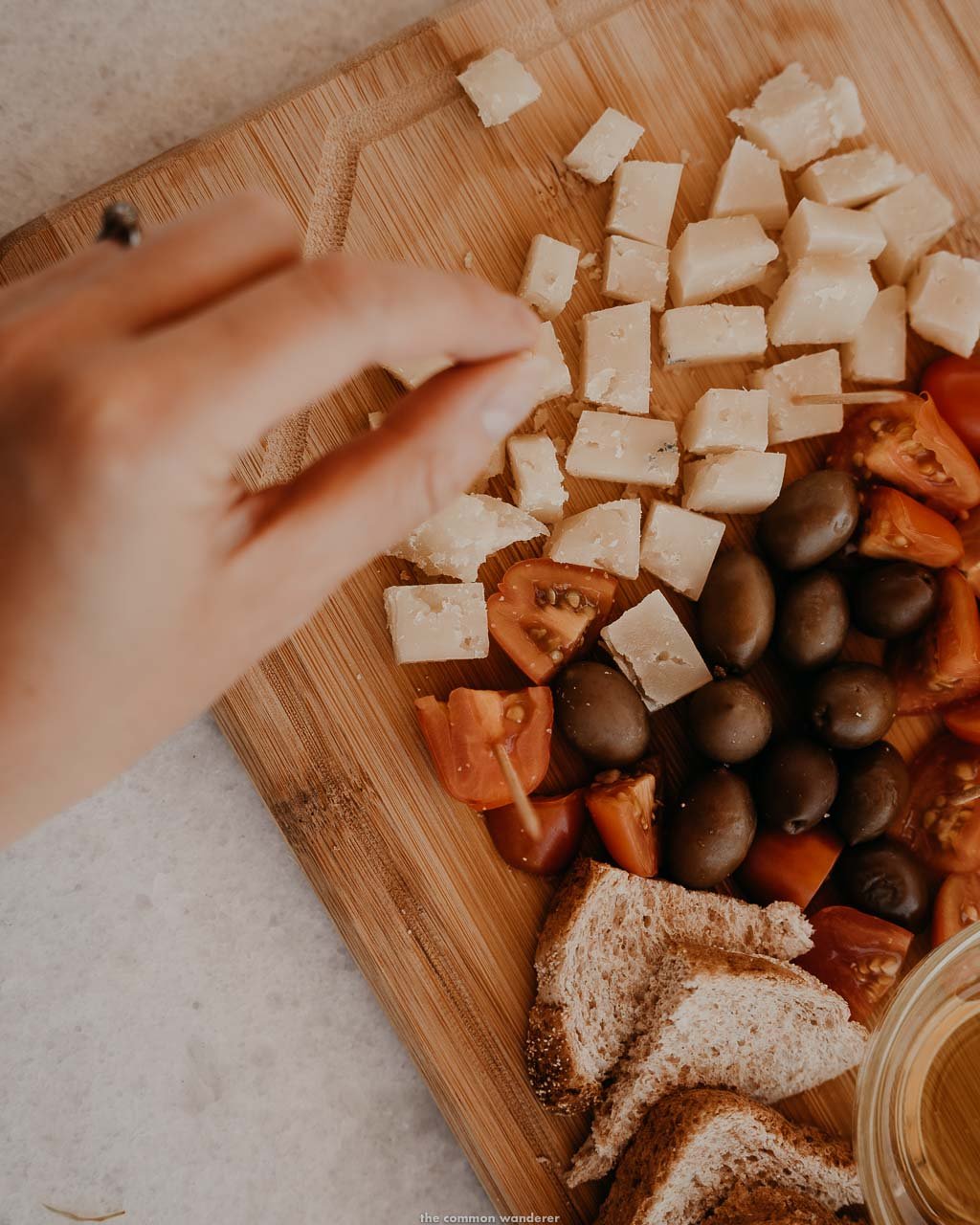
The next day, we found ourselves sitting in the courtyard of a tiny press house, shaded by a large umbrella with a spread of homegrown olives, cheese, tomatoes and olive oil on the table in front of us.
Saint Anna Winery is run entirely by Manolis Petrakis, a 20-something who does everything himself. The days in the field, the winemaking and bottling, the cheese and olive oil production.
Every bit of it, alone, by hand, with what is clearly a lifelong passion for the craft. He's been working toward this since his pre-teen years, and it shows in everything he produces.
There are seven wines on offer, dry white, rosé, red and sweet varietals, all made exclusively from Cycladic grape varieties, which matters to Manolis both in celebrating local growing traditions and in maintaining a sustainable approach. The tasting also includes homegrown produce and a walk through the gardens and the family's 9th-century church on the property.
We bought a bottle of white on the way out. It didn't last the evening.
A few things to know before visiting: book in advance by email, look for the little white Saint Anna church when you arrive and park there - the winery is on the same property. Bring cash.
THE DETAILS
Where |Saint Anna Winery, Naxos
Cost | €44 per person (bring cash)
Tips | Book in advance here

THE KOUROS STATUES OF NAXOS
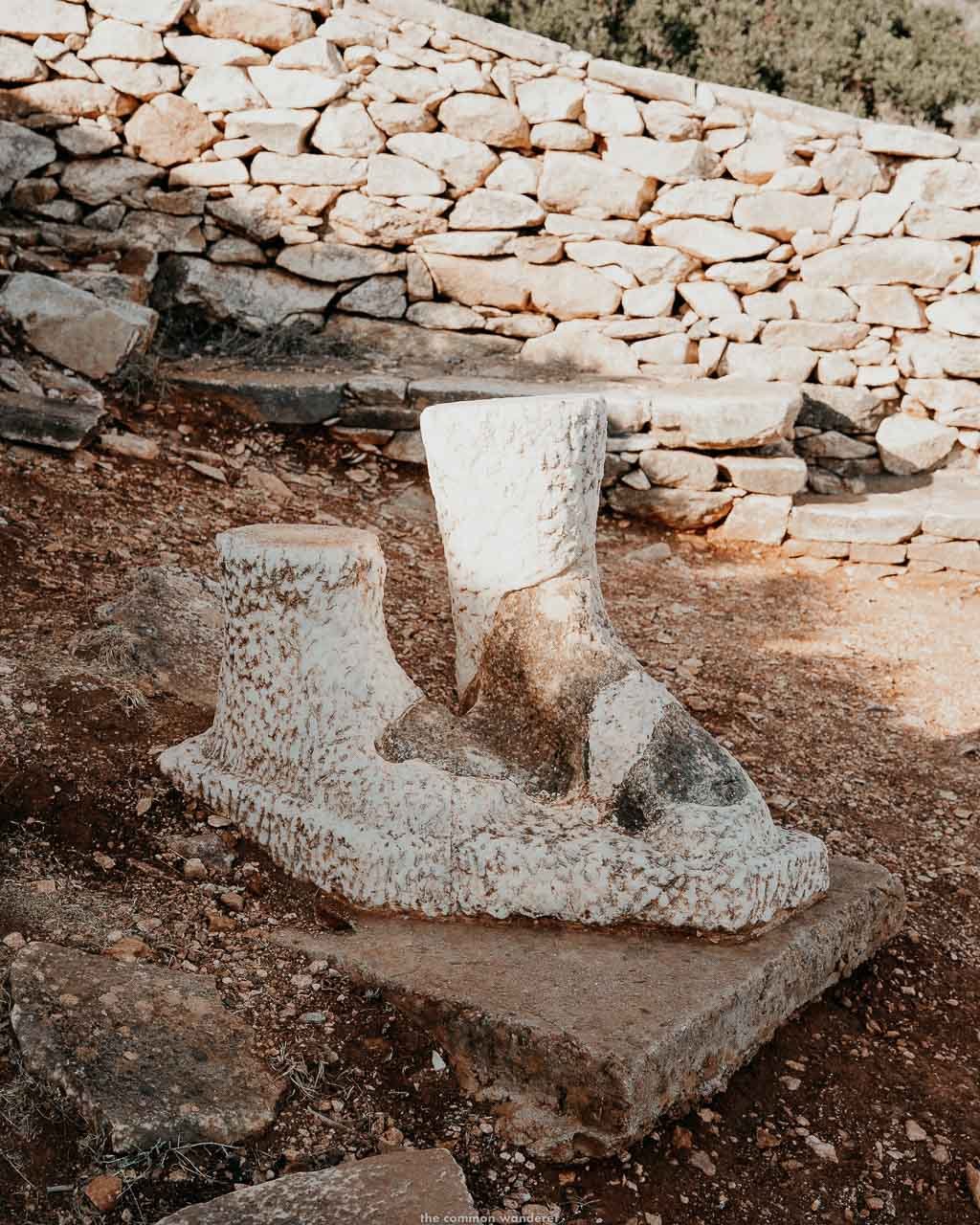
Just outside the village of Melanes, in a pretty green valley in the centre of the island, two enormous unfinished marble statues lie exactly where the ancient sculptors abandoned them thousands of years ago and have remained largely undisturbed since.
The Kouros of Flerio measures six metres and dates to around 570 BC.
One leg is broken, which is likely why it was left. The prevailing theory is that these figures were abandoned when they cracked during quarrying or transportation, or when an order fell through. The proximity to the ancient quarry makes the whole story legible in a way that a museum never quite manages.
Less than a kilometre further along the trail lies the Kouros of the Gorge, his broken feet beside him.
The first statue is a two-minute walk from the car park. The second is around 15 minutes further. The path is uneven in places, so wear proper shoes and bring water — there's not much shade. The ancient Sanctuary of Flerio is close by for those who want more context.
If you want to find the third and largest kouros, the Kouros of Apollonas in the north of the island measures10.7 metres. Less atmospheric than Melanes but worth seeing if you're making a day of the northern coast.
THE DETAILS
Where |Kouros of Naxos, Melanes
Opening Hours | All-day
Cost | Free entry
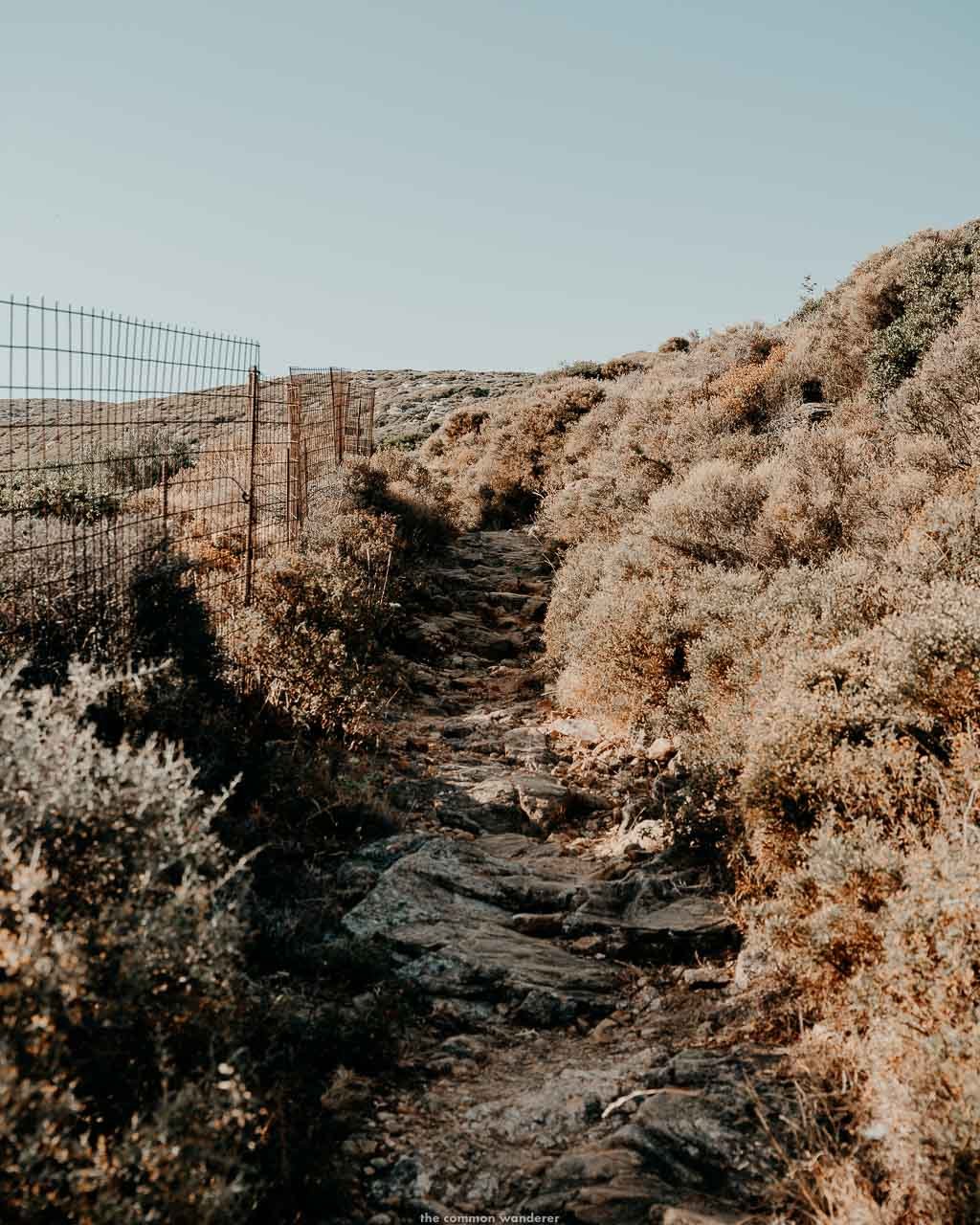
ALYKO HOTEL RUINS AND STREET ART
In the southeast of the island near Alyko (and Hawaii Beach), a hotel that never quite got finished in the 1960s sits slowly crumbling back into the landscape. The concrete shells are still standing, open to the sky, with the Aegean visible through every empty window frame.
At some point, someone started painting the walls. Then more people did. Now the whole site is covered with internationally recognised street art in the middle of absolutely nowhere on a Greek island.
The standout piece is from Balinese artist WD (Wild Drawing), whose work "No Place Like Home" stops you mid-step. The setting makes everything hit differently than it would in a city.
The Alyko Cedar Forest is right next door if the heat gets to you, one of only eight cedar forests in Greece and genuinely lovely to walk through. Hawaii Beach is a short walk from the ruins and is worth combining on the same day.
You'll need a car, scooter or ATV to get here - it’s around 30 minutes from Chora.
THE DETAILS
Where |Alyko, Naxos

GO DIVING OFF THE WATERS OF NAXOS
The waters off Naxos are incredible, and considerably less visited than the more famous dive sites elsewhere in Greece.
Blue Fin Divers, a PADI 5-star centre on Agios Prokopios Beach, has been operating since 2006 and knows these waters better than anyone.
There are over 10 dive sites accessible from the centre, covering everything from Mediterranean reefs and ancient shipwrecks to the standout attraction: the wreck of a British Beaufighter, a WW2 bomber that went down off Naxos and has since become a living reef.
There's also the cargo ship Marianna, which sank in a storm in 1982, and the remains of a WWI Arado seaplane for those who want to make a full day of it.
Courses and dives are available for all levels - beginners can start in the calm, shallow waters of Agios Prokopios bay, while certified divers can head straight to the more advanced sites. Snorkelling tours are also available for those not ready to go under.
THE DETAILS
Where |Blue Fin Divers, Agios Prokopios, Naxos
Opening Hours | 8 am - 11 pm
Cost | From €25
TAKE A SAILING BOAT TOUR AROUND NAXOS
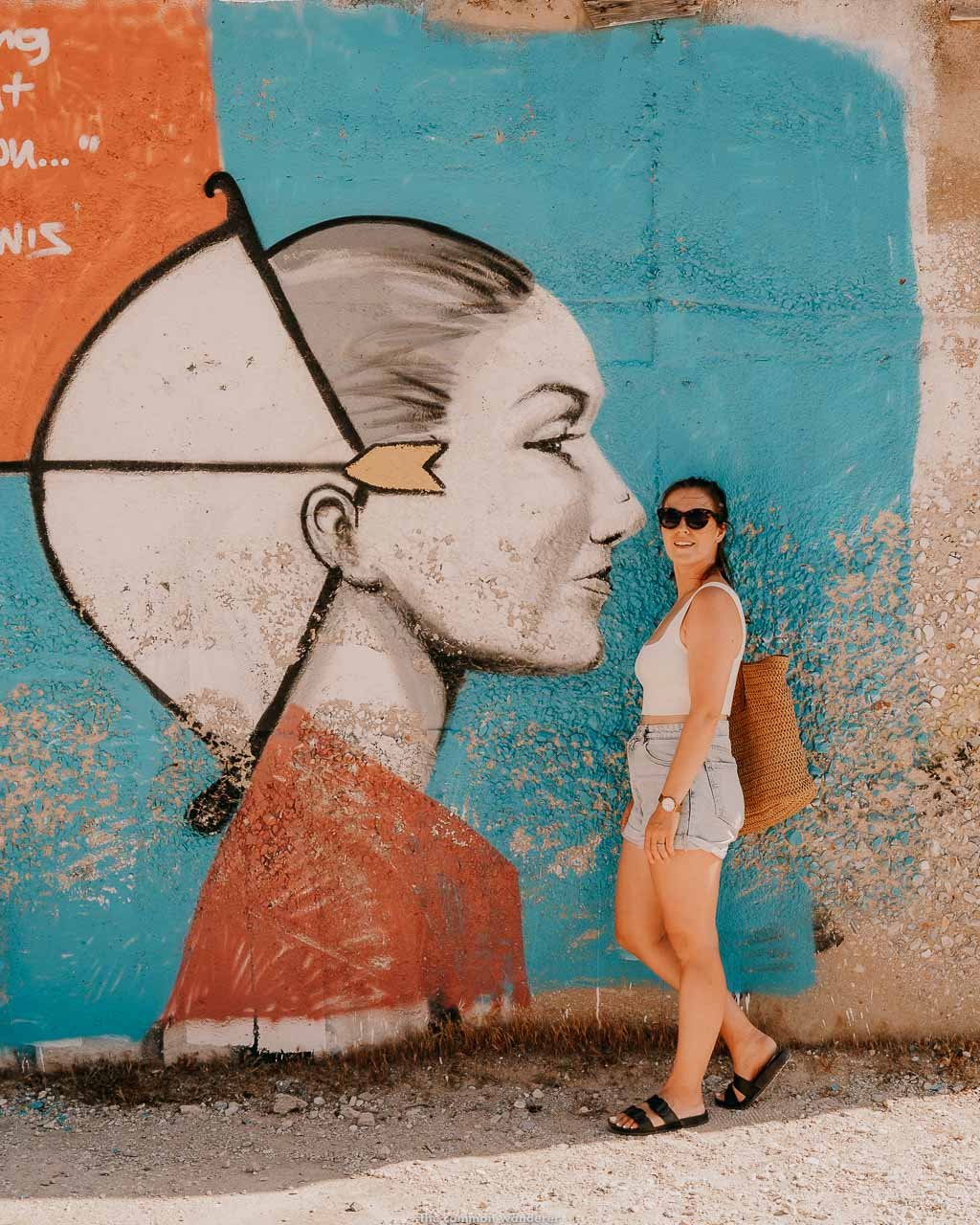
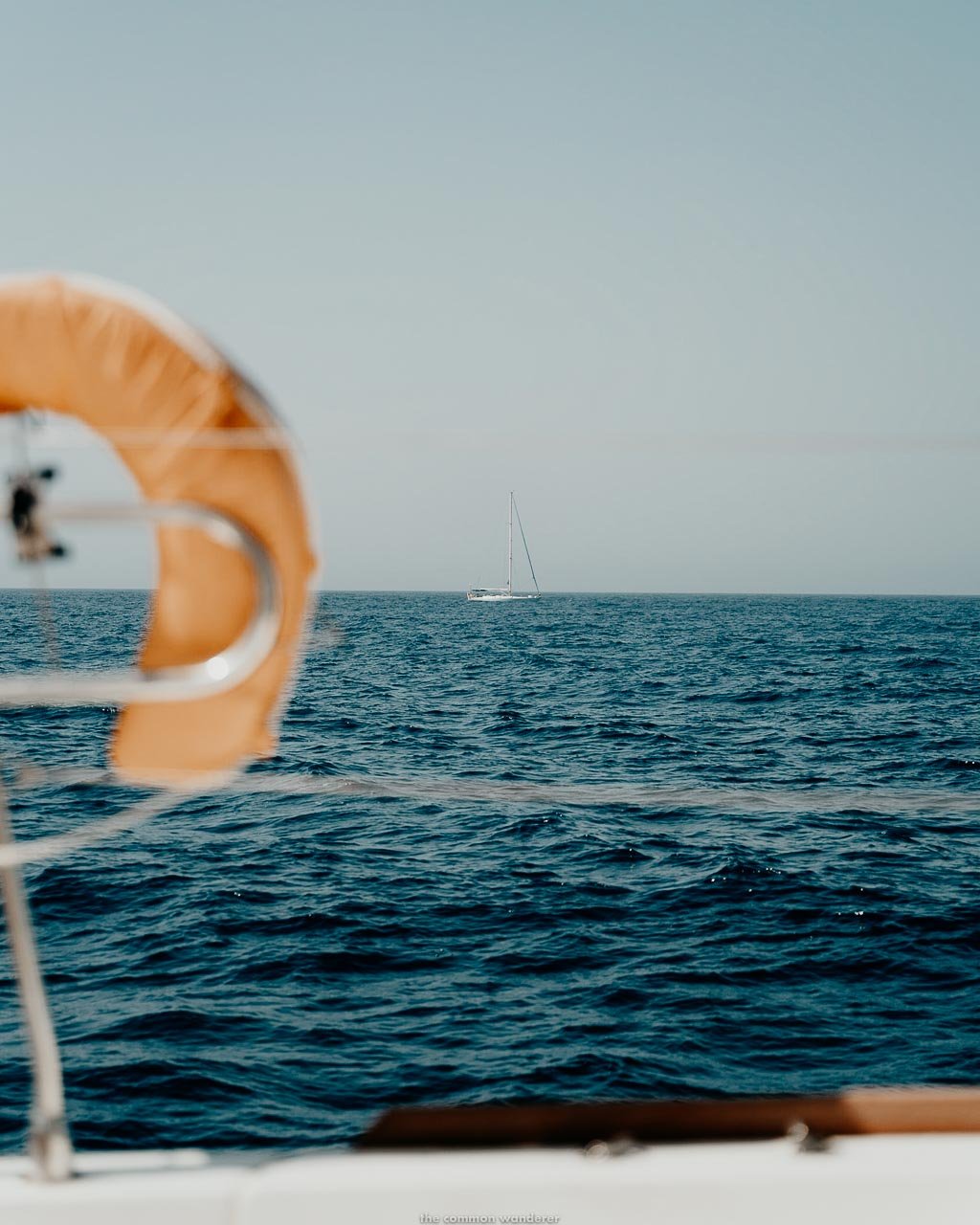
Naxos from the water is a different island entirely. Hidden coves, sea caves, the Small Cyclades just offshore and coastline that's simply inaccessible by car or foot.
A full-day catamaran tour is one of the best ways to spend a day on Naxos, particularly if you want to reach the more remote beaches and get out to Koufonisia, Iraklia or Schinoussa in the Lesser Cyclades.
Most tours include multiple swim and snorkel stops, a meal on board and plenty of time in the water.
The catamarans are comfortable, the crew know these waters well, and the whole thing runs at exactly the right pace for a Greek summer day.
Book well in advance in July and August - the best boats fill up weeks ahead.
THE DETAILS
Where |Chora Harbour, Naxos
Cost | From around €105 per person for a shared catamaran day cruise
Best For | Swimming, snorkelling, hidden coves and reaching the Small Cyclades
Good to Know | Routes vary depending on weather and wind conditions. Book ahead in peak season.
BOOK | This all-inclusive sailing around Naxos, or this more affordable sailing option
NAXIAN EXPERIENCES COOKING CLASS
One of our last days on Naxos ended up being one of the best afternoons we had anywhere in Greece.
Mrs Juliana's farm has been in the family for generations and dates back to the 16th century. There's no electricity. Just a vine-covered terrace, a wood fire, cicadas and no particular schedule.
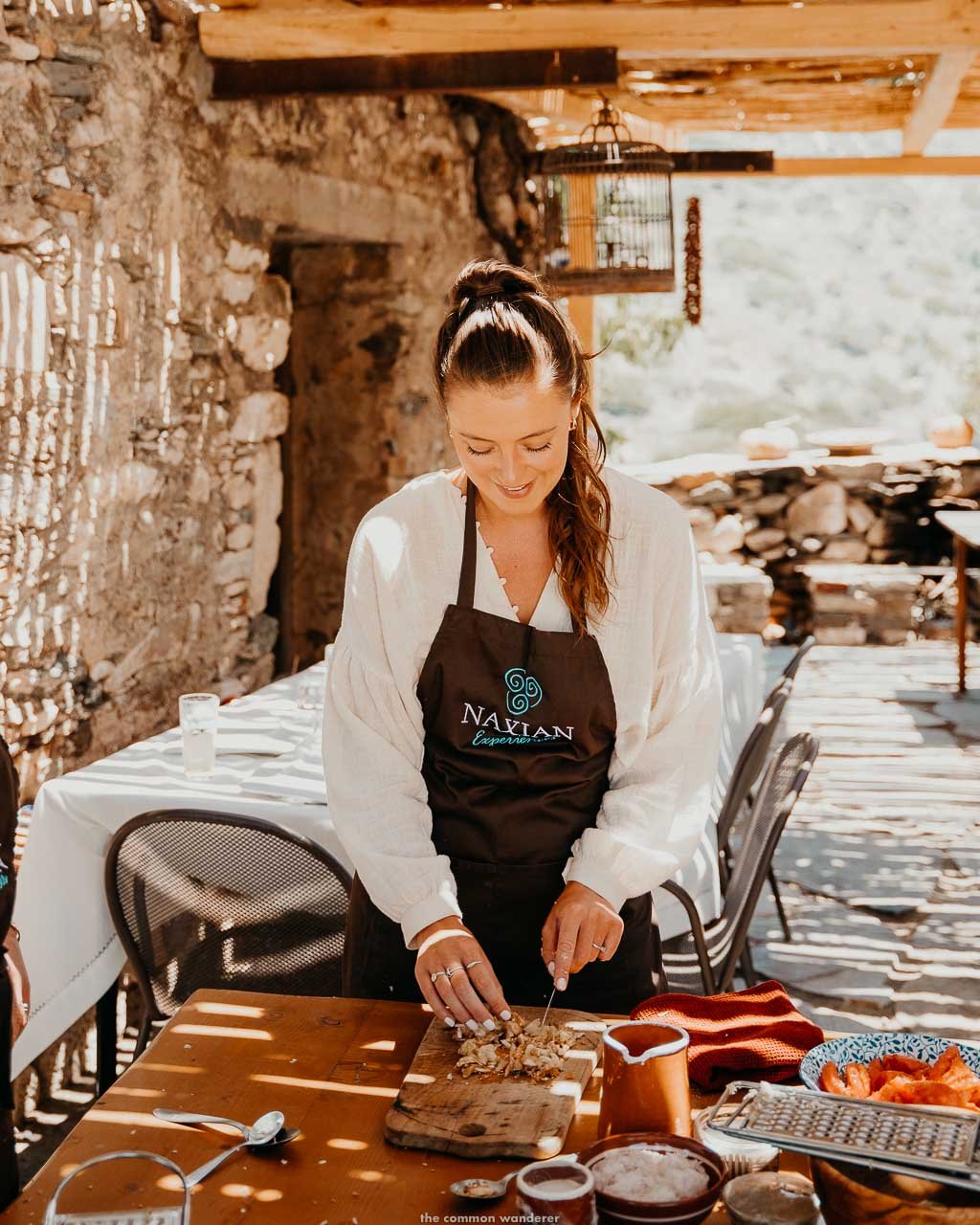
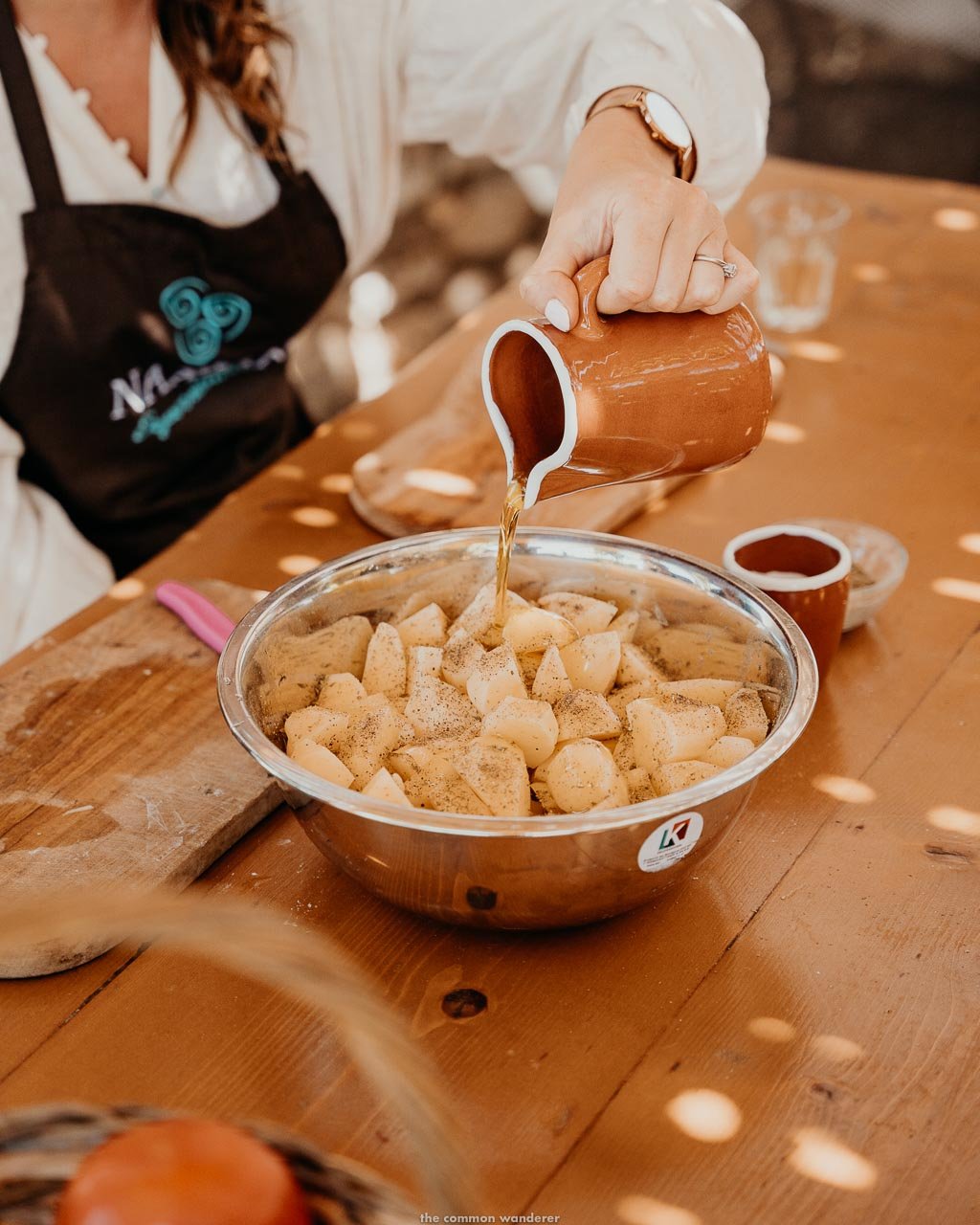
We arrived to wine, as all good Greek afternoons should begin, and spent the next few hours learning to cook a proper Naxian meal: zucchini fritters with mint, saganaki, roasted Naxian potatoes, stuffed vegetables, lamb, and loukoumades with local honey.
The food was cooked over wood, eaten under vines and washed down with more wine than we'd planned. Between dishes, Mrs Juliana and her husband talked about the farm, the island, the produce — stories of olive harvests and walnut trees and the rhythms of a life built around growing things.
And then, almost as an aside, Anthony Bourdain had sat in these exact seats. He'd cancelled his other plans for the day and stayed all afternoon. We asked how long. A very long time, apparently.
We didn't find that hard to believe.
THE DETAILS
Where | Naxian Experiences, Naxos
Cost | €400.00 per group
BOOK | Naxos town cooking class, or through Naxian Experiences (book here)
EAT YOUR WAY AROUND NAXOS
The food on Naxos is, in our opinion, the best in the Cyclades, and it's something we came back to again and again during a month on the island.
The reason is that Naxos has fertile land, natural springs and mineral-rich soil that most Cycladic islands simply don't.
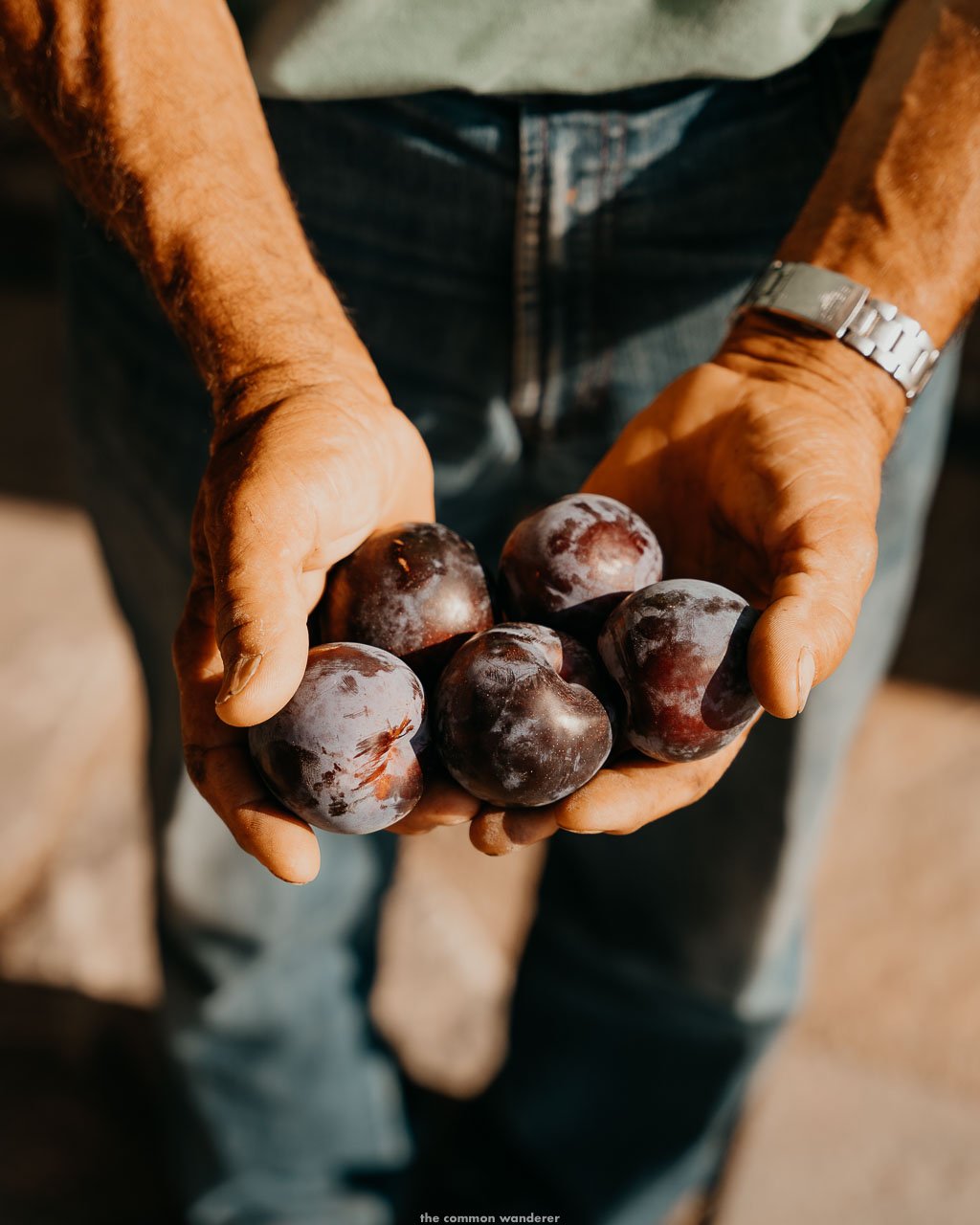
Small-scale organic farms, olive orchards, vineyards and grazing land in every direction. The produce that comes from this land is generous in flavour, and the tavernas across the island know it.
A few things worth eating before you leave:
NAXIAN POTATOES | the island's most famous export. Waxy, flavoursome, exceptional as fries.
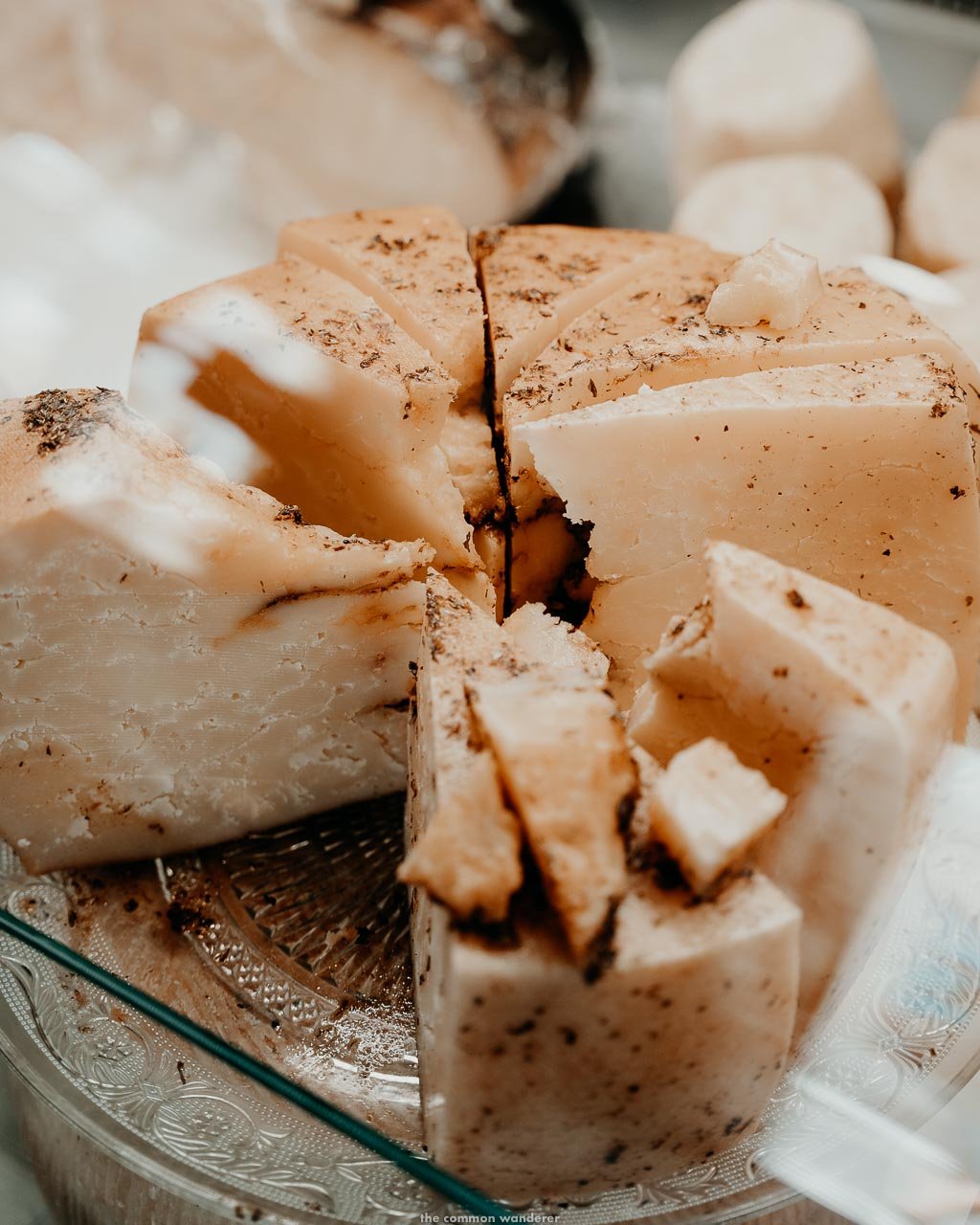
NAXIAN CHEESES | Gruyere, Xinomyzithra and Arseniko. The real highlight of Naxian produce. Get to Koufopoulos cheese shop on Sokratous Papavasiliou in Chora and taste everything they put in front of you.
NAXIAN GRAVIERA SAGANAKI | pan-fried Gruyere with honey and sesame seeds. Order it everywhere.
PATOUDO | lamb stuffed with chard, fennel, herbs and garlic, slow-cooked until it falls apart. One of the most distinctively Naxian dishes.
KITRON | the local liqueur made from citron tree leaves, produced nowhere else in the world. Try all three varieties: green, yellow and clear.
For the full guide to Naxian food culture, what to order and why it's the best in the Cyclades, our Naxos Island Guide covers it in detail. For the best places to eat in Chora specifically, our Naxos Chora guide covers every producer, shop and restaurant worth visiting in town.
TRY CITRON LIQUEUR IN HALKI
We're not big drinkers, and we're known among friends as the ones who nurse a single drink all evening. So take it from us when we say: Kitron is good.
Naxos' famous citron liqueur is made from the leaves of the citron tree, similar to a lemon but distinct in flavour, and comes in three varieties: green (sweet), yellow (the strongest) and clear (somewhere in the middle).
We tried it over a dozen times on the island and came to prefer it over Italy's limoncello. The subtle citrus flavour is more refined than you'd expect from a liqueur.
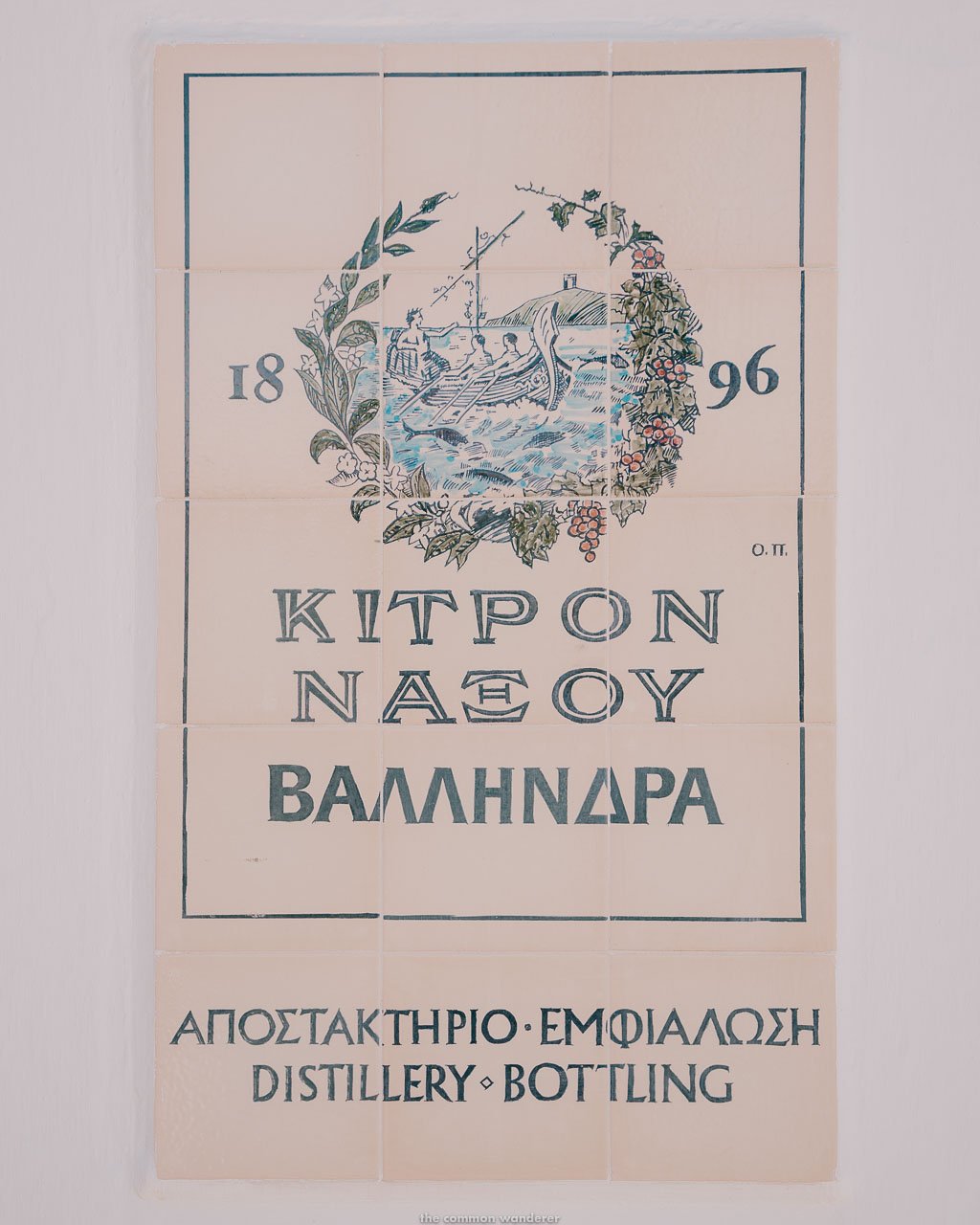
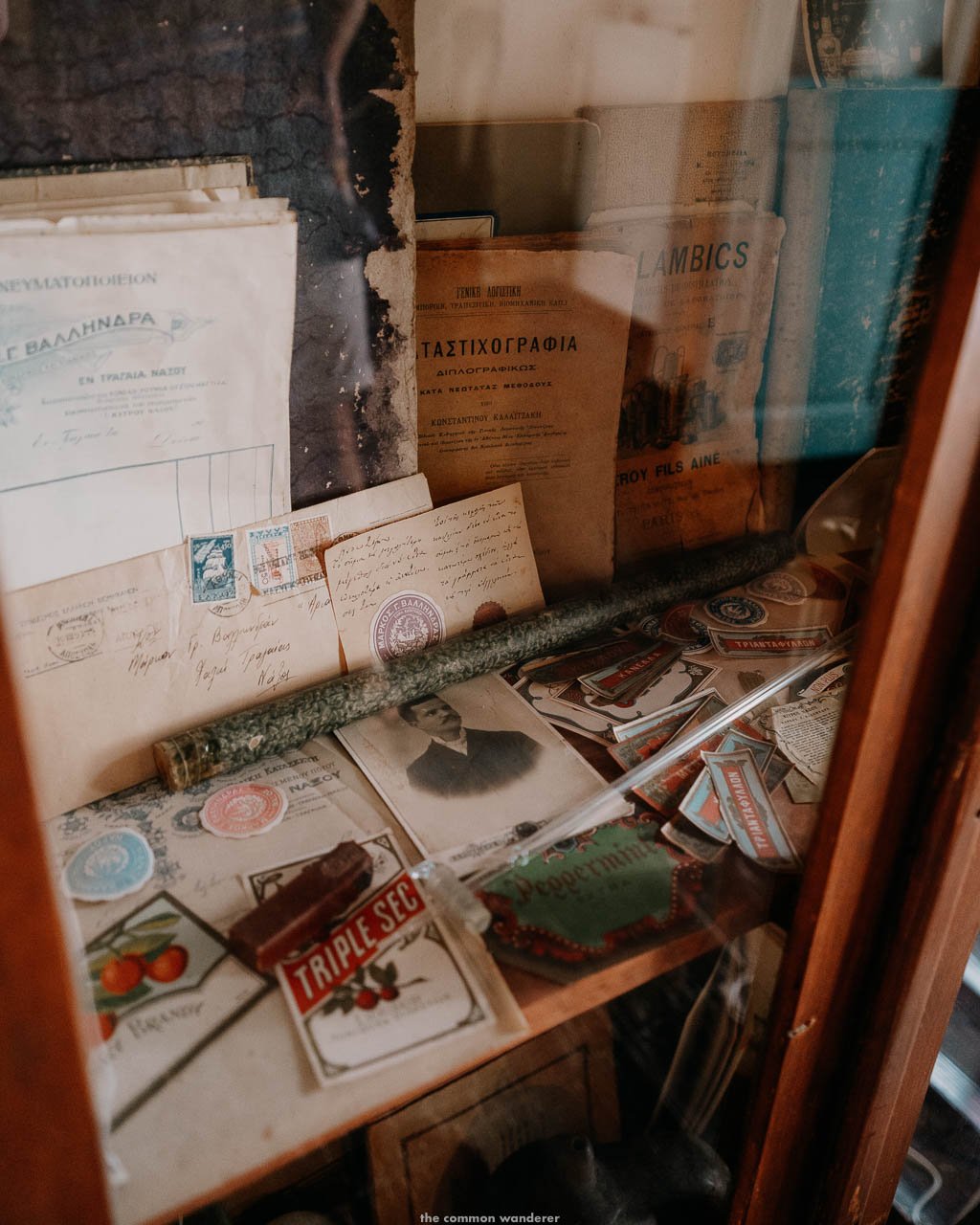
The place to try it is the Vallindras Distillery in Halki, a family-owned operation housed in a mansion in the village, still making Kitron the same way it always has.
You can taste all three varieties, learn about the distilling process and the family history, and leave with a bottle or two. It's free to visit, and no reservation is needed.
Kitron has, over the years, become something of a cult drink in Athens' cocktail bars. Naxos got there first.
THE DETAILS
Where |Vallindras Kitron distillery, Halki
Opening Hours | Daily: 10 am - 5 pm
Cost | Free
THE ABANDONED JESUIT MONASTERY IN KALAMITSIA
We debated including this one. It's hard to find, the dirt road to get there is rough, and parts of the building are unstable with no safety barriers in place. If that puts you off, skip it.
If it doesn't, it's worth the detour.
Originally a Venetian mansion dating to the 14th century and converted into a summer residence for Jesuit monks in the 17th, the monastery sits amongst the hills above Naxos with views that alone justify the drive.
The main building is a warren of rooms and hidden chambers, the architecture still ornate beneath the decay, and the whole place has the quality of somewhere that history simply walked away from and left.
You'll need a car. Follow the road to Melanes, then take the bumpy dirt road to the monastery. Go slowly and go carefully.
THE DETAILS
Where |Kalimitsia, Naxos

TRAVEL INSURANCE | STAY SAFE IN GREECE
Honest take: if something goes wrong - a medical emergency, a missed ferry, a scooter accident on a winding island road, travel insurance can be the difference between a stressful (but entertaining in hindsight) story and a catastrophic one.
After 10+ years of full-time travel, here's what we use:
WORLD NOMADS | Offers travel insurance for independent travellers and intrepid families. Their policies offer coverage for more than 150 activities as well as emergency medical, lost luggage, trip cancellation and more.
GET A QUOTE | World Nomads
PLANNING A TRIP TO GREECE SOON?
Make the most of your time on Naxos with our essential Greece travel guides.
EXPLORE NAXOS
Naxos Island Guide — everything you need to know before you visit
MORE CYCLADES
PLAN YOUR GREEK SUMMER WITH OUR USEFUL GUIDES




Some links in this guide to the best things to do on Naxos are affiliate links.
If you choose to purchase using these links, we receive a small commission at no extra cost to you. Please know that by using these affiliate links, you're directly supporting The Common Wanderer to stay wandering, the running costs of the site, and our ability to provide you with free content to help you on your travels.
That, and you're officially a legend.

From what to see and do, through to the best restaurants and bars to enjoy your evenings, our Naoussa guide has everything you’re looking for.